
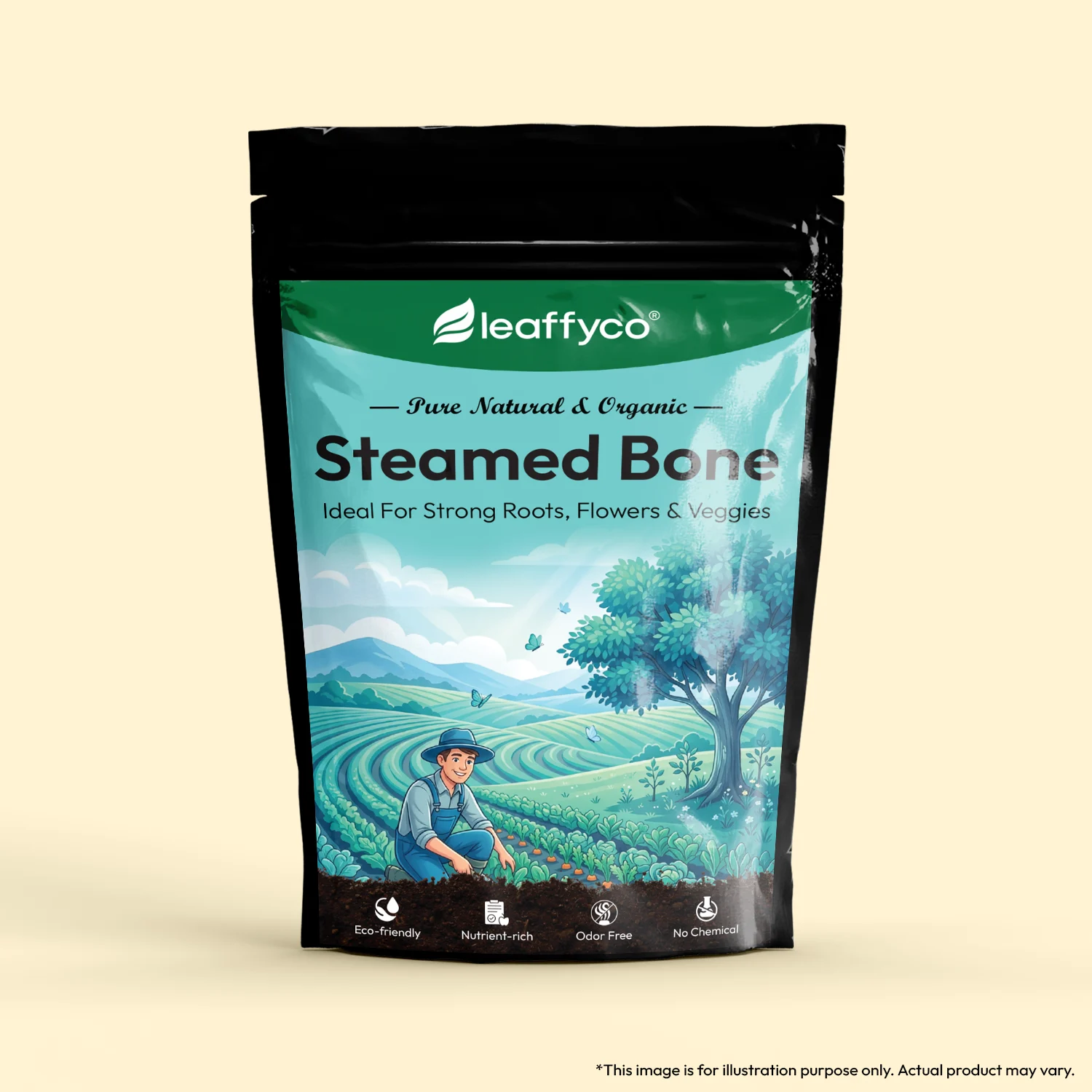
Steamed Bone Meal is one of the most trusted and widely used organic fertilizers among home gardeners, organic farmers, nursery growers, and horticulture professionals. Derived from carefully processed animal bones that are steamed, sterilized, dried, and finely ground, Steamed Bone Meal provides a concentrated source of phosphorus and calcium, two essential nutrients required for vigorous plant growth, root development, flowering, and fruit production. Bone meal is typically rich in phosphorus and calcium and is commonly used as an organic soil amendment for flowering plants, vegetables, bulbs, roses, and fruit-bearing crops.
Unlike synthetic fertilizers that release nutrients rapidly, Steamed Bone Meal acts as a slow-release organic fertilizer, supplying nutrients gradually over an extended period. This helps create a steady nutrient supply while improving soil fertility naturally. The steaming process removes fats and impurities while making nutrients safer and more accessible for plant uptake.
Whether you are growing vegetables, flowering annuals, perennial plants, fruit trees, roses, orchids, bulbs, or potted plants, Steamed Bone Meal can become an essential part of your gardening routine.
What is Steamed Bone Meal?
Steamed Bone Meal is an organic fertilizer produced by steaming animal bones under high pressure and then grinding them into a fine powder or granular form. The steaming process sterilizes the material, removes unwanted residues, and helps improve nutrient availability. The final product is rich in phosphorus, calcium, and trace minerals that support healthy plant development.
Most commercial Steamed Bone Meal fertilizers contain:
- High Phosphorus (P)
- Calcium (Ca)
- Small amounts of Nitrogen (N)
- Trace minerals
Typical NPK values range around 3-15-0 or 3-20-0 depending on the manufacturing process.
Benefits of Steamed Bone Meal Fertilizer
- Promotes Strong Root Development: Phosphorus is one of the most important nutrients for root formation. Plants require phosphorus during their early growth stages to establish healthy root systems capable of absorbing water and nutrients efficiently.
- Benefits include:
- Faster root establishment
- Improved transplant success
- Stronger seedlings
- Better nutrient uptake
- Enhanced drought tolerance
- Root crops such as carrots, radish, beetroot, turnips, potatoes, and sweet potatoes particularly benefit from phosphorus-rich fertilizers like Steamed Bone Meal.
- Benefits include:
- Encourages Abundant Flowering: One of the primary reasons gardeners use Steamed Bone Meal is its ability to boost flowering.
- Phosphorus plays a major role in:
- Flower bud formation
- Bloom development
- Flower size enhancement
- Improved flower color
- Longer flowering periods
- It is especially beneficial for:
- Roses
- Hibiscus
- Marigolds
- Petunias
- Bougainvillea
- Chrysanthemums
- Dahlia
- Orchids
- Jasmine
- Plants receiving adequate phosphorus often produce more flowers and healthier blooms.
- Phosphorus plays a major role in:
- Improves Fruit Production: Fruiting plants require additional phosphorus during flowering and fruit-setting stages.
- Steamed Bone Meal supports:
- Better fruit set
- Larger fruits
- Improved fruit quality
- Increased yields
- Enhanced seed development
- Phosphorus is closely linked to flower and fruit production in many crops.
- Steamed Bone Meal supports:
- Supplies Essential Calcium: Calcium is crucial for plant health and structural development.
- Benefits include:
- Stronger cell walls
- Better stem strength
- Reduced blossom-end rot
- Improved fruit quality
- Enhanced plant vigor
- Calcium deficiency can result in weak growth and poor crop performance. Bone meal naturally provides this valuable nutrient.
- Benefits include:
- Slow-Release Nutrient Supply: Unlike chemical fertilizers that release nutrients rapidly, Steamed Bone Meal breaks down slowly in the soil.
- Advantages include:
- Long-lasting nutrition
- Reduced nutrient loss
- Better nutrient efficiency
- Improved soil health
- Lower risk of fertilizer burn
- This gradual release makes it an excellent long-term organic fertilizer.
- Advantages include:
- Supports Organic Gardening: Steamed Bone Meal is widely accepted in organic gardening because it is derived from natural sources and helps recycle valuable nutrients.
- Organic gardeners use bone meal to:
- Improve soil fertility naturally
- Reduce dependency on synthetic fertilizers
- Enhance sustainable gardening practices
- Encourage healthy plant growth
- It remains one of the most popular organic phosphorus fertilizers available.
- Organic gardeners use bone meal to:
How to Use Steamed Bone Meal Fertilizer
- For New Planting: Mix Steamed Bone Meal directly into the soil before planting.
- Recommended dosage:
- Small pots: 1–2 tablespoons
- Medium pots: 2–4 tablespoons
- Large containers: 4–6 tablespoons
- Garden beds: 50–100 grams per square meter
- Mix thoroughly into the root zone.
- Recommended dosage:
- For Established Plants
- Loosen the soil around the plant.
- Apply recommended quantity.
- Mix lightly into the soil.
- Water thoroughly.
- For Flowering Plants
- Apply every 45–60 days during active growing and flowering seasons.
- For Fruit Plants
- Apply before flowering and fruit-setting stages for best results.
Soil and pH Requirements
Steamed Bone Meal performs best in slightly acidic to neutral soils. Phosphorus availability decreases significantly in alkaline soils with pH above 7.0, making soil testing beneficial before heavy application. Ideal soil pH: 6.0 to 7.0. This range helps maximize phosphorus uptake.
Why Choose Steamed Bone Meal Over Chemical Fertilizers?
Steamed Bone Meal
✔ Organic source of nutrients
✔ Slow-release fertilizer
✔ Improves soil health
✔ Supports beneficial microbes
✔ Provides phosphorus and calcium
✔ Long-lasting effects
Chemical Fertilizers
✘ Quick nutrient loss
✘ May require frequent application
✘ Can increase salt buildup
✘ Greater risk of over-fertilization
Many gardeners combine Steamed Bone Meal with compost, vermicompost, seaweed fertilizer, or organic manure for balanced nutrition.
Final Thoughts
Steamed Bone Meal remains one of the most effective organic fertilizers for gardeners seeking stronger roots, healthier plants, larger blooms, and better fruit yields. Rich in phosphorus and calcium, this natural plant food delivers long-lasting nutrition while supporting sustainable and eco-friendly gardening practices.
Whether you are cultivating roses, vegetables, fruit trees, flowering ornamentals, bulbs, or container plants, Steamed Bone Meal provides a reliable source of essential nutrients that contribute to vigorous growth and exceptional garden performance. Add this premium organic fertilizer to your gardening routine and experience healthier roots, abundant flowering, improved fruiting, and thriving plants throughout the growing season.
Frequently Asked Questions (FAQs)
What is Steamed Bone Meal used for?
Steamed Bone Meal is primarily used to supply phosphorus and calcium for strong roots, abundant flowering, and improved fruit production.
How often should I apply Bone Meal?
Generally every 45–60 days for actively growing plants, depending on plant type and soil condition.
Can Bone Meal be used for roses?
Yes. Roses respond extremely well to phosphorus-rich fertilizers and often produce more blooms with proper bone meal application.
Is Steamed Bone Meal suitable for organic gardening?
Yes. It is widely accepted as an organic fertilizer and soil amendment.
Can too much Bone Meal harm plants?
Excess phosphorus may create nutrient imbalances, so application should follow recommended rates and ideally be guided by soil testing.
Reviews
There are no reviews yet