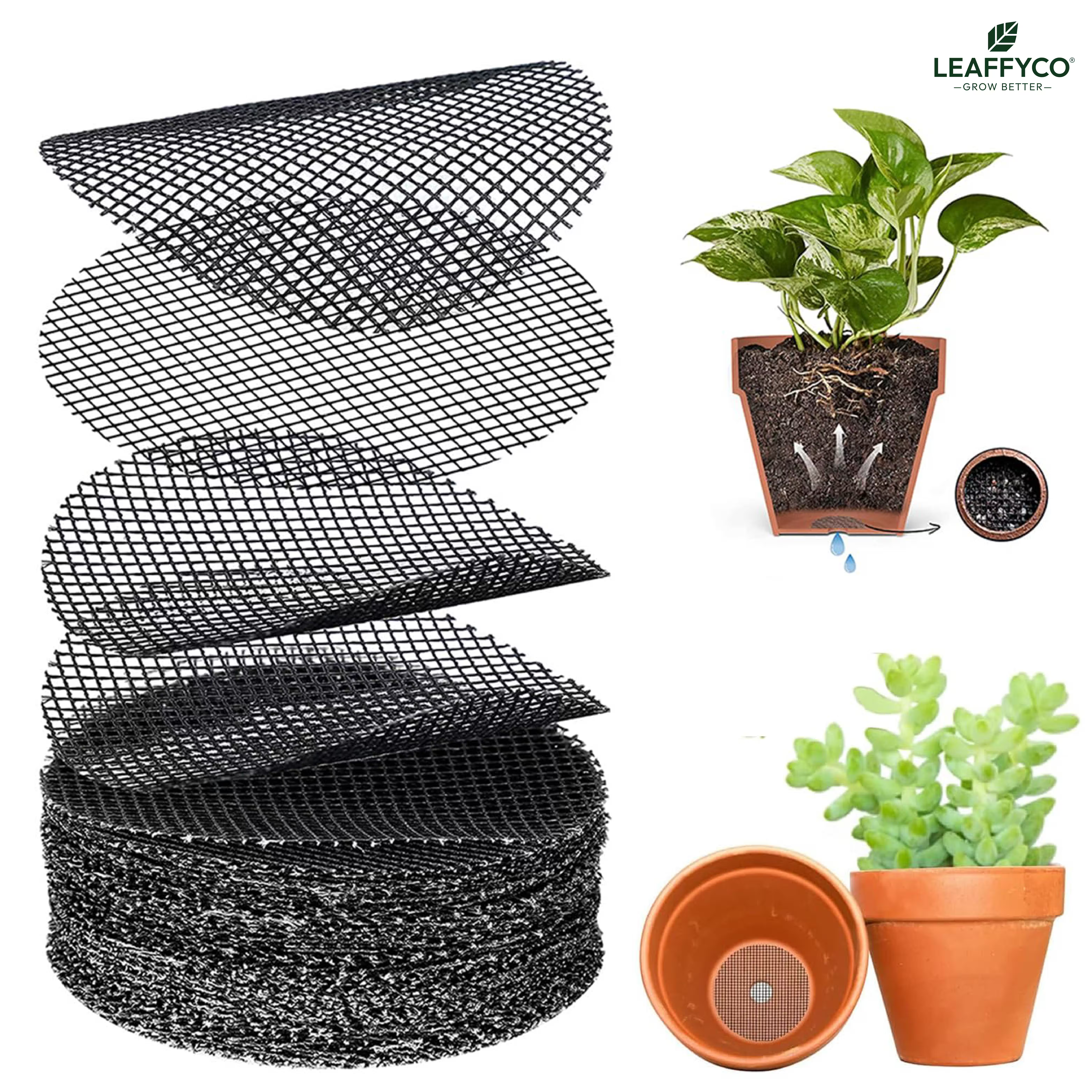
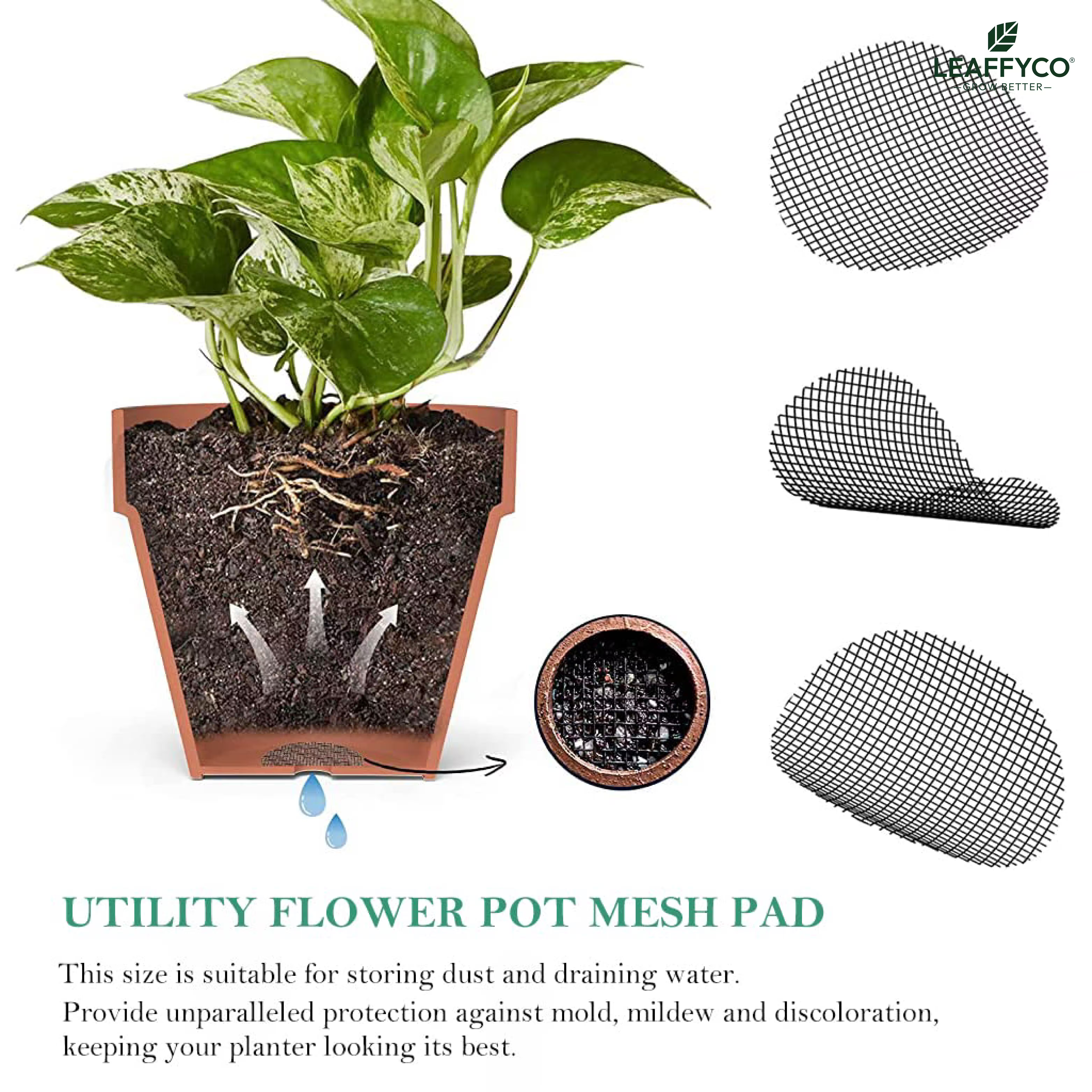
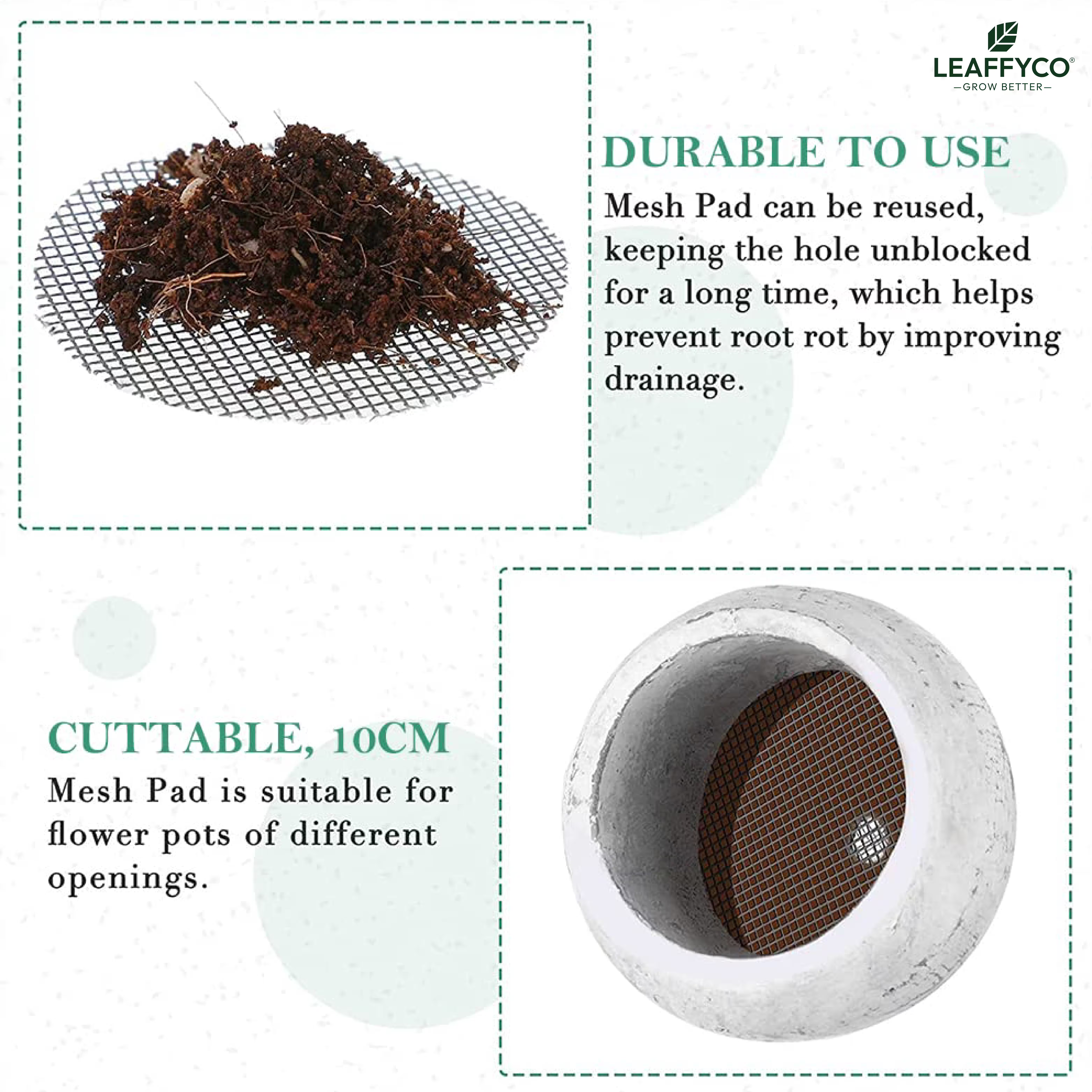



Drainage Mesh Pads for Pots are an essential gardening accessory designed to improve soil drainage, prevent soil loss, and promote healthier plant growth. Whether you are growing flowering plants, vegetables, succulents, indoor plants, or ornamental plants, proper drainage is one of the most important factors for maintaining healthy roots. These practical mesh pads help create an effective drainage barrier at the bottom of plant pots, allowing excess water to escape while keeping potting soil, cocopeat, and other growing media inside the container.
When watering plants, excess water needs a proper exit from the pot. Without an effective drainage barrier, soil particles can escape through drainage holes, making a mess and gradually reducing the amount of growing medium inside the pot. In some cases, loose soil can also clog drainage holes and interfere with proper water movement. Drainage Mesh Pads for Pots help address these common gardening problems by covering the drainage openings while allowing water to flow out.
These mesh pads are particularly useful for home gardeners, terrace gardeners, balcony gardeners, nursery owners, professional landscapers, and indoor plant enthusiasts. They make potting and repotting easier, cleaner, and more convenient. Simply place a mesh pad over the drainage hole before adding the growing medium to create a protective layer between the soil and the pot opening.
If you want to maintain cleaner pots, reduce soil leakage, and support better drainage practices, Drainage Mesh Pads for Pots are a useful addition to your gardening supplies.
About Drainage Mesh Pads for Pots
Drainage Mesh Pads for Pots are specially designed mesh coverings used at the bottom of gardening containers to cover drainage holes. Their primary purpose is to prevent potting soil and growing media from escaping through the bottom openings while allowing excess irrigation water to drain freely.
Most plant pots come with one or more drainage holes. These holes are necessary because plants need well-drained growing conditions. When excess water remains around the roots for extended periods, it can reduce oxygen availability and increase the risk of root problems.
However, drainage holes also create another challenge: fine soil particles, compost, cocopeat, and other growing materials can gradually wash out during watering. This can make the surrounding area dirty and lead to soil wastage.
A drainage mesh pad offers a simple solution. It acts as a protective filter between the growing medium and the drainage opening. Water passes through the mesh, while larger soil particles remain inside the pot.
These pads are suitable for different types of gardening containers, depending on their dimensions and mesh design.
Whether you are preparing a new planter, repotting an established houseplant, or setting up multiple nursery pots, these mesh pads can make the process more convenient.
Why Is Proper Pot Drainage Important?
Proper drainage is essential for maintaining healthy plants. Plant roots require both moisture and oxygen to grow properly. If excess water cannot escape, the growing medium may remain excessively wet.
Good drainage practices help:
- Remove excess irrigation water from the pot.
- Maintain better airflow within the growing medium.
- Reduce water stagnation around plant roots.
- Prevent unnecessary loss of potting soil through drainage holes.
- Maintain a cleaner gardening area.
- Support healthier root development when combined with an appropriate potting mix.
Important: Drainage mesh pads do not replace drainage holes or improve drainage in a poorly designed pot by themselves. Always use pots with functional drainage holes and a suitable, well-draining growing medium.
Composition
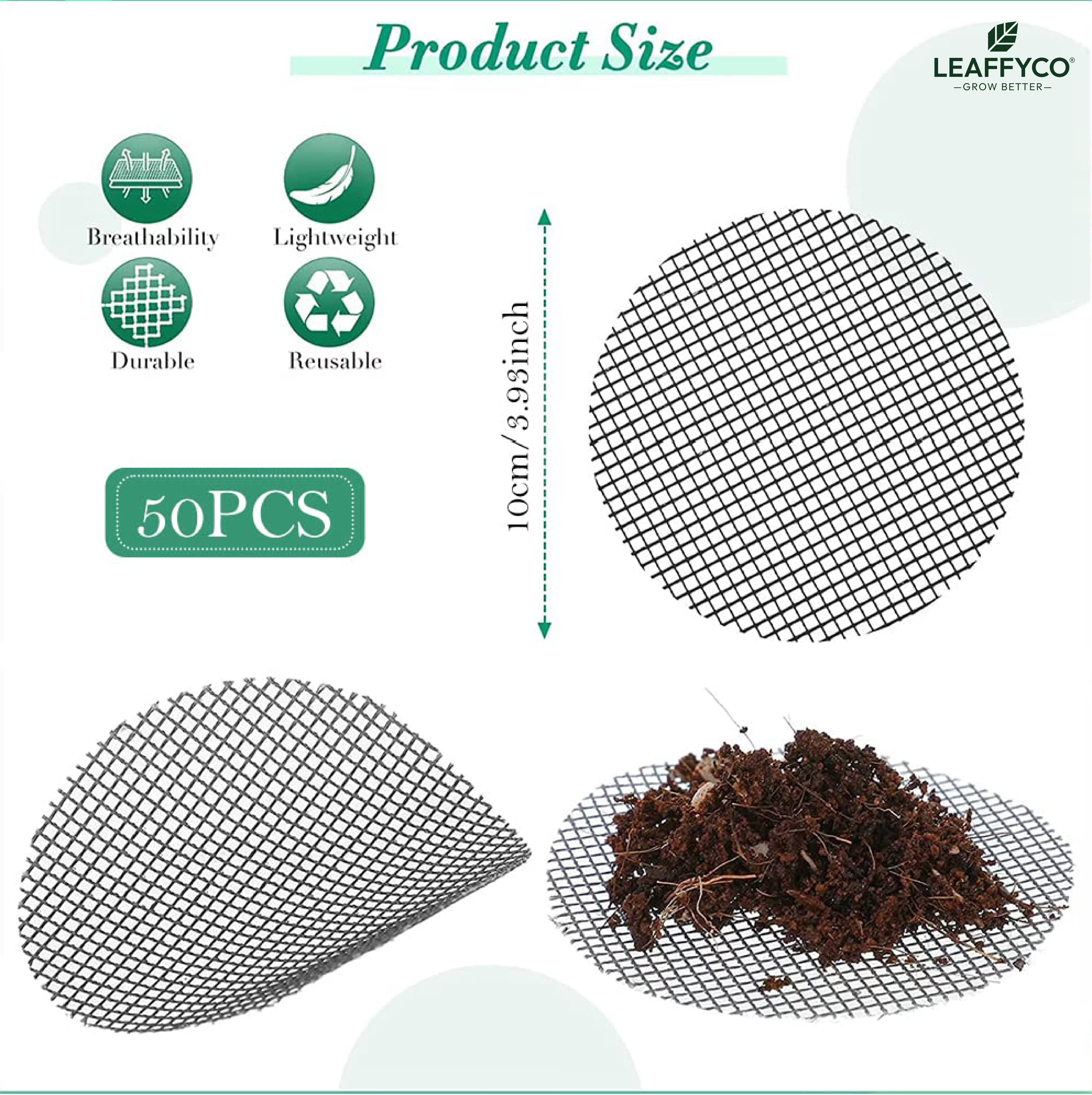
Drainage Mesh Pads for Pots are made from a mesh material designed to provide a physical barrier while allowing water to pass through.
The exact material, thickness, dimensions, shape, and colour depend on the product specifications.
General product composition and construction:
- Main Material: Mesh-based material.
- Structure: Open mesh pattern designed to allow water movement.
- Function: Covers drainage openings and helps retain potting soil.
- Design: Lightweight and convenient to place inside plant pots.
- Application: Used between the drainage hole and potting medium.
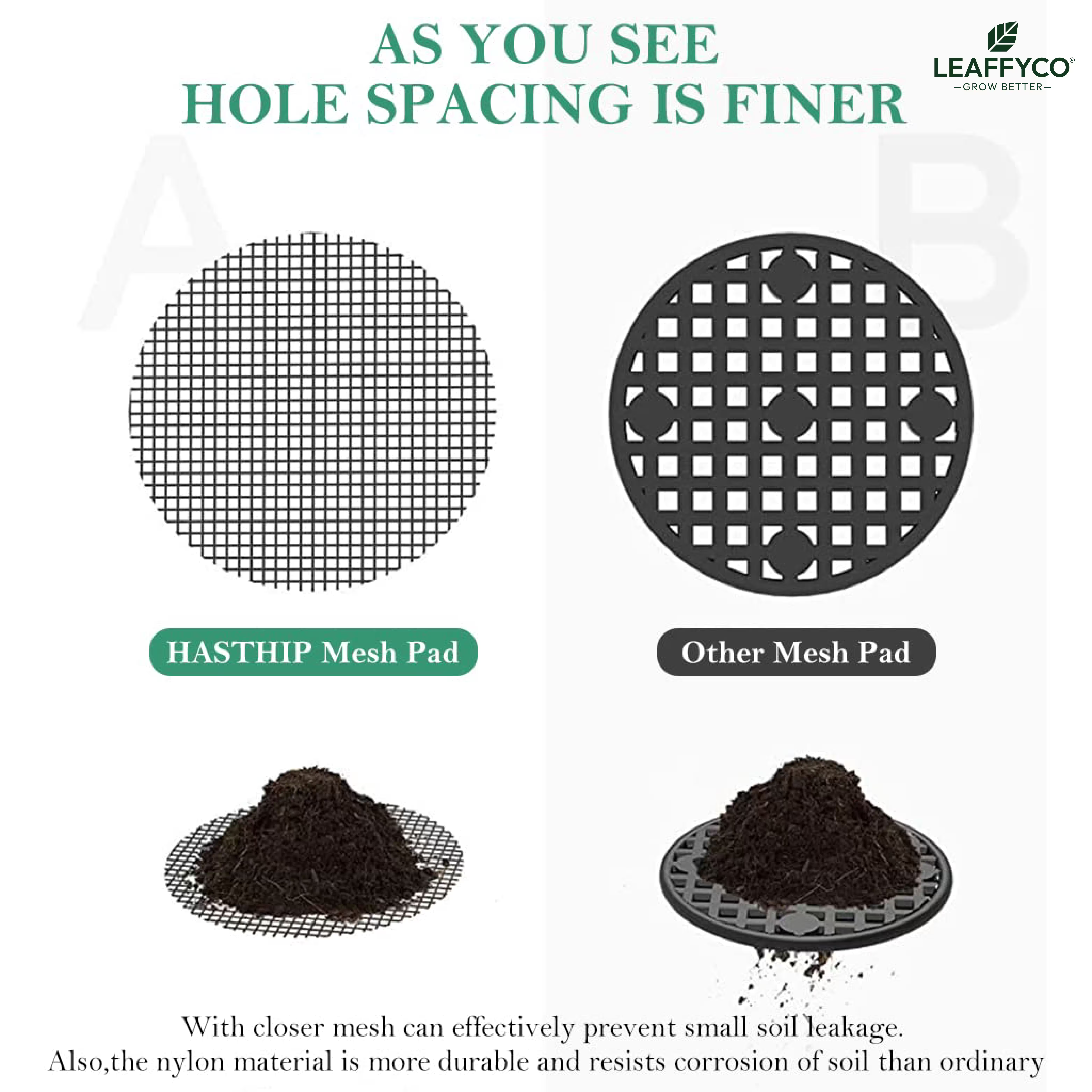
The mesh structure is important because it allows excess water to pass through while reducing the movement of larger growing-medium particles.
Note: Please refer to the actual product packaging or specifications for the confirmed material composition, dimensions, and other technical details. Do not assume that all drainage mesh pads are made from the same material.
Key Features of Drainage Mesh Pads for Pots
- Helps Prevent Soil Leakage: One of the most useful features of drainage mesh pads is their ability to reduce soil leakage through the bottom drainage holes. They help keep potting soil, compost, cocopeat, and other growing materials inside the container.
- Allows Excess Water to Drain: The open mesh design allows excess irrigation water to pass through the drainage openings. This helps maintain the intended drainage function of the pot when the mesh is correctly positioned and the holes remain unobstructed.
- Easy to Install: Drainage mesh pads are simple to use. Place one over the drainage hole before filling the pot with soil. No complicated installation process or special gardening equipment is required.
- Suitable for Different Plant Containers: Depending on their size and shape, these pads can be used with different gardening containers, including plastic pots, ceramic planters, nursery pots, and decorative plant containers.
- Lightweight and Convenient: Their lightweight construction makes them convenient for regular gardening activities, including pot preparation, repotting, and transplanting.
- Helps Maintain a Cleaner Gardening Area: By reducing soil particles escaping from drainage holes, these pads can help keep balconies, windowsills, indoor plant stands, terraces, and gardening workspaces cleaner.
- Useful for Indoor and Outdoor Gardening: These mesh pads can be used for indoor houseplants as well as outdoor container gardening, provided the pad is compatible with the pot’s drainage opening.
- Useful During Repotting: When transferring plants into new containers, placing a drainage mesh pad over the drainage hole helps prevent the newly added growing medium from falling out.
Benefits of Drainage Mesh Pads for Pots
Using Drainage Mesh Pads for Pots offers several practical benefits for everyday gardening. Although they are small accessories, they can make pot preparation, planting, and maintenance easier.
- Prevents Potting Soil from Falling Out: When you water plants, loose soil particles can escape through the drainage holes at the bottom of pots. This is particularly common when using lightweight potting mixtures containing cocopeat, perlite, vermicompost, compost, and other fine materials.
- Drainage mesh pads help retain the growing medium inside the pot, reducing soil wastage and making watering more convenient.
- Supports Better Drainage Management: Plants need a balance of moisture and oxygen around their roots. Drainage holes help remove excess water from the container.
- These mesh pads cover the openings without completely blocking water movement, helping maintain the drainage function of the pot.
- Reduces Drainage Hole Blockage from Loose Soil: Fine growing-medium particles can accumulate around drainage openings. A suitable mesh barrier helps reduce the amount of soil entering and obstructing these holes.
- However, regularly inspect drainage holes to ensure they remain free from accumulated roots, algae, and debris.
- Keeps Indoor Spaces Cleaner: Indoor gardeners often place plants on tables, shelves, windowsills, and decorative stands. Soil leaking from drainage holes can create unwanted dirt and stains.
- Drainage Mesh Pads for Pots help minimize this problem, making them particularly useful for indoor gardening and decorative planters.
- Reduces Growing Medium Wastage: Good-quality potting mixes can contain several ingredients, including cocopeat, compost, perlite, vermiculite, and garden soil. Losing these materials through drainage holes can increase gardening costs.
- Mesh pads help retain the growing medium, allowing you to make better use of your potting mixture.
- Makes Repotting More Convenient: Repotting is an important part of plant maintenance. When preparing a new container, installing a drainage mesh pad before adding soil makes the process easier.
- It helps prevent growing media from falling out while you fill the pot and position the plant.
- Useful for Different Gardening Styles: Whether you maintain a small balcony garden, an indoor plant collection, a terrace vegetable garden, or a commercial nursery, drainage mesh pads can be a useful accessory.
- Helps Maintain Proper Potting Arrangements: A drainage mesh pads for pots creates a simple barrier between the potting mixture and the drainage opening. This helps maintain a more organized arrangement inside the pot.
- It is especially useful when working with lightweight growing media that can easily escape through larger drainage holes.
How to Use Drainage Mesh Pads for Pots
Using Drainage Mesh Pads for Pots is simple and does not require any special gardening skills. Follow these steps for the best results.
- Step 1: Select the Right Pot: Choose a plant pot or container with functional drainage holes at the bottom. Make sure the drainage holes are appropriate for the type and size of the container.
- Step 2: Clean the Drainage Holes: Before installing the mesh pad, clean the bottom of the pot. Remove any old soil, roots, dust, or other debris that may block the drainage openings.
- Step 3: Position the Mesh Pad: Place the drainage mesh pads for pots directly over the drainage hole inside the pot. Ensure that the pad covers the opening adequately. If the pot has multiple drainage holes, use appropriately sized pads to cover the necessary openings.
- Step 4: Add a Suitable Potting Mix: After positioning the drainage mesh pads for pots, gradually add your preferred potting mixture. You can prepare a growing medium according to the requirements of your plants.
- For example:
- Indoor plants: Cocopeat, compost, perlite, and suitable soil.
- Flowering plants: Garden soil, compost, cocopeat, and other suitable amendments.
- Vegetable plants: Garden soil, vermicompost, and cocopeat.
- Succulents and cacti: A well-draining mineral-rich growing mixture.
- The exact mixture should depend on the plant species and its growing requirements.
- For example:
- Step 5: Plant Your Favourite Plant: Once the pot is filled with the required growing medium, place your plant carefully. Position the roots properly and fill the remaining space with potting mix. Avoid pressing the soil too tightly, as excessive compaction can reduce air circulation.
- Step 6: Water the Plant: Water the plant according to its requirements. Check whether excess water is escaping through the drainage holes. If water does not drain properly, inspect the openings and ensure that the mesh pad or growing medium is not obstructing them.
- Step 7: Maintain the Drainage System: During regular plant maintenance, check the drainage holes occasionally. Remove accumulated roots, soil deposits, or debris whenever necessary.
Gardening tip: Do not use a solid plastic sheet or an impermeable material in place of drainage mesh pads for pots. The purpose of a drainage mesh pad is to retain soil while allowing excess water to escape.
Used For – Applications of Drainage Mesh Pads for Pots
Drainage Mesh Pads for Pots are versatile gardening accessories that can be used in several types of planting and container gardening applications.
- Indoor Plant Gardening: Indoor plants are commonly grown in decorative pots placed on shelves, tables, windowsills, and plant stands. These mesh pads help reduce soil leakage and keep indoor gardening spaces cleaner.
- Balcony Gardening: Balcony gardening often involves growing multiple plants in containers. Soil leakage from drainage holes can make balcony floors dirty. Using drainage mesh pads helps retain growing media and maintain cleaner balcony spaces.
- Terrace Gardening: Terrace gardeners frequently use grow bags, plastic containers, and large planters for growing vegetables and flowering plants. Suitable drainage mesh pads can help reduce soil loss from compatible containers.
- Vegetable Gardening: Home gardeners growing vegetables in pots can use drainage mesh pads while preparing their containers.
- Flower Gardening: Flowering plants require suitable growing conditions, including appropriate watering and drainage.
- Succulent and Cactus Gardening: Succulents and cacti generally require a well-draining growing medium. Drainage mesh pads can help retain the growing medium while allowing excess irrigation water to escape. They are useful when preparing suitable containers for different varieties of succulents and cacti. Remember that the mesh pad does not replace the need for a properly draining potting mixture.
- Nursery and Commercial Gardening: Plant nurseries and commercial growers regularly prepare large numbers of pots for seedlings, ornamental plants, and other container-grown crops. Drainage mesh pads can make pot preparation more convenient and help reduce growing-medium wastage.
- Plant Repotting and Transplanting: Whenever you transfer a plant from one container to another, you can install a drainage mesh pad before adding fresh potting soil. This makes repotting easier and helps prevent soil from escaping through the drainage openings.
Why Every Home Gardener Should Have Drainage Mesh Pads for Pots
Successful gardening is not just about choosing good seeds, fertilizers, and potting soil. Small accessories also play an important role in making everyday gardening easier.
Drainage is one of the basic requirements of container gardening. Even a high-quality potting mixture may not perform properly if the container’s drainage openings are blocked or unsuitable.
Drainage Mesh Pads for Pots provide a simple and practical way to manage soil retention around these openings. They are particularly useful for gardeners who frequently change pots, grow plants indoors, maintain decorative planters, or prepare multiple containers for seasonal gardening.
Instead of allowing loose soil to escape every time you water your plants, install a suitable drainage mesh pads for pots during pot preparation. It is a small addition to your gardening setup that can make regular plant care more convenient.
Gardening Tips for Better Results
For the best experience when using Drainage Mesh Pads for Pots, follow these useful gardening tips:
- Always select a pot with proper drainage holes.
- Choose a mesh pad that adequately covers the drainage opening.
- Do not use mesh pads that completely prevent water movement.
- Avoid compacting the potting mixture excessively.
- Select a potting mixture suitable for the particular plant.
- Do not overwater plants, even when the pot has good drainage.
- Check drainage holes regularly for blockages.
- Use appropriately sized containers for different plants.
- During repotting, clean old pots before installing new mesh pads.
- Ensure that the mesh material is suitable for gardening use.
Following these simple practices can help you maintain a cleaner and more efficient container gardening system.
Who Should Buy Drainage Mesh Pads for Pots?
These drainage mesh pads for pots are suitable for anyone who grows plants in containers.
They are especially recommended for:
- Home gardeners who grow indoor and outdoor plants.
- Balcony gardeners looking for cleaner gardening arrangements.
- Terrace gardeners using multiple planting containers.
- Plant nursery owners preparing pots for sale.
- Gardening beginners learning container gardening.
- Professional landscapers maintaining decorative planters.
- Succulent and cactus collectors.
- Vegetable gardeners growing crops in pots.
- Gardening enthusiasts who frequently repot plants.
Whether you maintain five pots or a large collection of plants, drainage mesh pads can be a useful addition to your gardening toolkit.
Frequently Asked Questions (FAQs)
Q1. What are Drainage Mesh Pads for Pots used for?
Drainage Mesh Pads for Pots are used to cover drainage holes at the bottom of plant containers. They help prevent potting soil, compost, and other growing materials from escaping while allowing excess water to drain.
Q2. Do drainage mesh pads improve drainage in plant pots?
Drainage mesh pads help maintain the function of existing drainage holes by allowing water to pass through while retaining soil. They do not independently improve drainage in pots without suitable drainage holes or in poorly draining potting mixtures.
Q3. How do I use drainage mesh pads in flower pots?
Place the mesh pad over the drainage hole inside the flower pot before adding potting soil. Ensure that it covers the opening properly without blocking water movement. Then fill the pot with a suitable growing medium and plant your flower.
Q4. Can I use drainage mesh pads for indoor plants?
Yes. Drainage mesh pads can be used for indoor plants grown in suitable containers. They help reduce soil leakage through drainage holes and keep indoor gardening spaces cleaner.
Q5. Are drainage mesh pads suitable for vegetable plants and succulents?
Yes. They can be used for vegetable plants, succulents, cacti, flowering plants, and other container-grown plants. Always select an appropriate potting mixture and ensure proper drainage according to the plant’s requirements.
Final Words
Drainage Mesh Pads for Pots are a simple yet useful gardening accessory for anyone who wants to maintain cleaner, more convenient, and better-organized container gardening.
By covering drainage openings while allowing excess water to pass through, these mesh pads help reduce soil leakage, minimize growing-medium wastage, and support proper drainage practices.
Whether you are growing indoor plants, flowering plants, vegetables, succulents, or ornamental plants, adding a suitable drainage mesh pad during pot preparation can make your gardening experience easier.
If you love gardening and want to take better care of your plants, add Drainage Mesh Pads for Pots to your essential gardening supplies. Small gardening improvements can make a meaningful difference in your everyday plant care routine.


Reviews
There are no reviews yet