

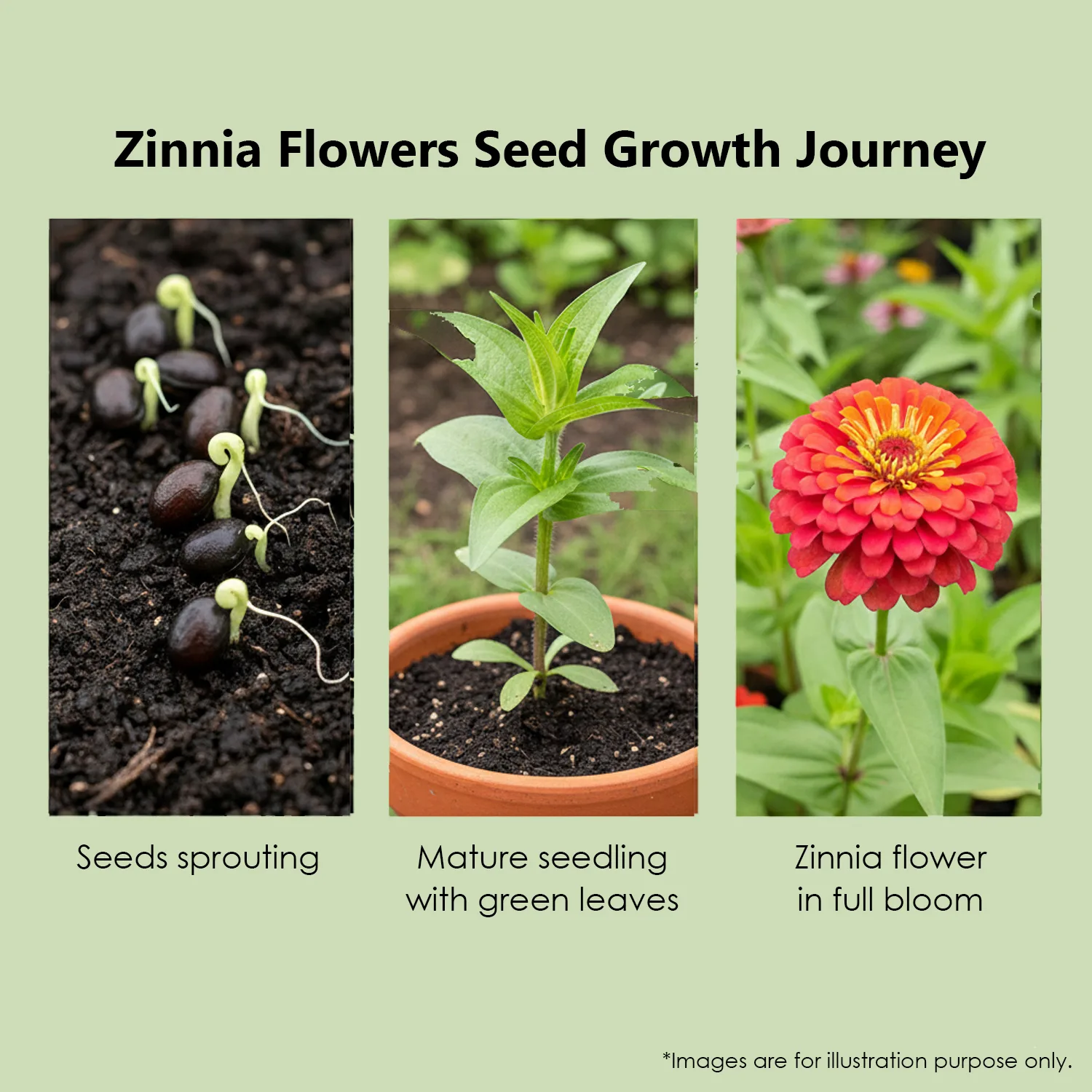




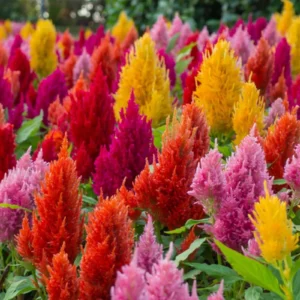


Zinnias are among the most loved flowering plants for home gardeners across India and the world. Their vibrant blooms, quick growth, minimal maintenance needs, and impressive color variety make them a perfect choice for beginners and experienced growers alike.
➤ Seasonal Planting Calendar – Zone Wise
| Zone / Region | States / Examples | Ideal Sowing Time | Transplant / Growth Period | Flowering & Harvest Season | Notes / Tips |
|---|---|---|---|---|---|
| North India (Plains) | Delhi, Punjab, Haryana, Uttar Pradesh, Bihar | Feb – Apr (Spring) & Jul – Aug (Monsoon) | Mar – May / Aug – Oct | Apr – Nov | Avoid frost; sow after winter chill ends. Great as summer flower. |
| North India (Hills) | Himachal Pradesh, Uttarakhand, Jammu (lower regions) | Mar – May | Apr – Jul | Jun – Oct | Needs mild temperatures and full sunlight. Avoid heavy monsoon rains. |
| Central India | Madhya Pradesh, Chhattisgarh | Feb – Apr & Jul – Aug | Mar – May / Aug – Oct | Apr – Nov | Prefers moderate humidity; mulch to retain moisture. |
| Western India (Dry / Semi-arid) | Rajasthan, Gujarat | Feb – Mar (Pre-summer) & Jul – Aug (Monsoon) | Mar – May / Aug – Oct | Apr – Nov | Excellent summer bloomer; irrigate twice a week in dry spells. |
| Eastern India | West Bengal, Odisha, Jharkhand | Feb – Apr & Jul – Aug | Mar – May / Aug – Oct | Apr – Nov | Prefers humid but well-drained soil; avoid waterlogging. |
| Southern India (Tropical) | Tamil Nadu, Kerala, Karnataka, Andhra Pradesh, Telangana | Year-round sowing possible (Best: Jan – Mar & Jul – Sep) | 3–4 weeks after sowing | Feb – Nov (peak) | Perennial-like behavior in tropical conditions; continuous bloom with pruning. |
| Western Coastal (Konkan, Goa, Coastal Maharashtra) | Goa, Mumbai, Ratnagiri, Mangalore | Jan – Mar & Jul – Aug | Feb – Apr / Aug – Oct | Apr – Nov | Ideal for seaside gardens; protect from heavy rain splash. |
| North-East India | Assam, Meghalaya, Nagaland, Manipur, Arunachal Pradesh | Mar – Apr (Pre-monsoon) | Apr – Jun | Jun – Oct | Ensure sunlight; water during dry spells. Excellent for hilly gardens. |
➤ A Complete Guide to Growing Zinnia Flower: Germination to Full Care
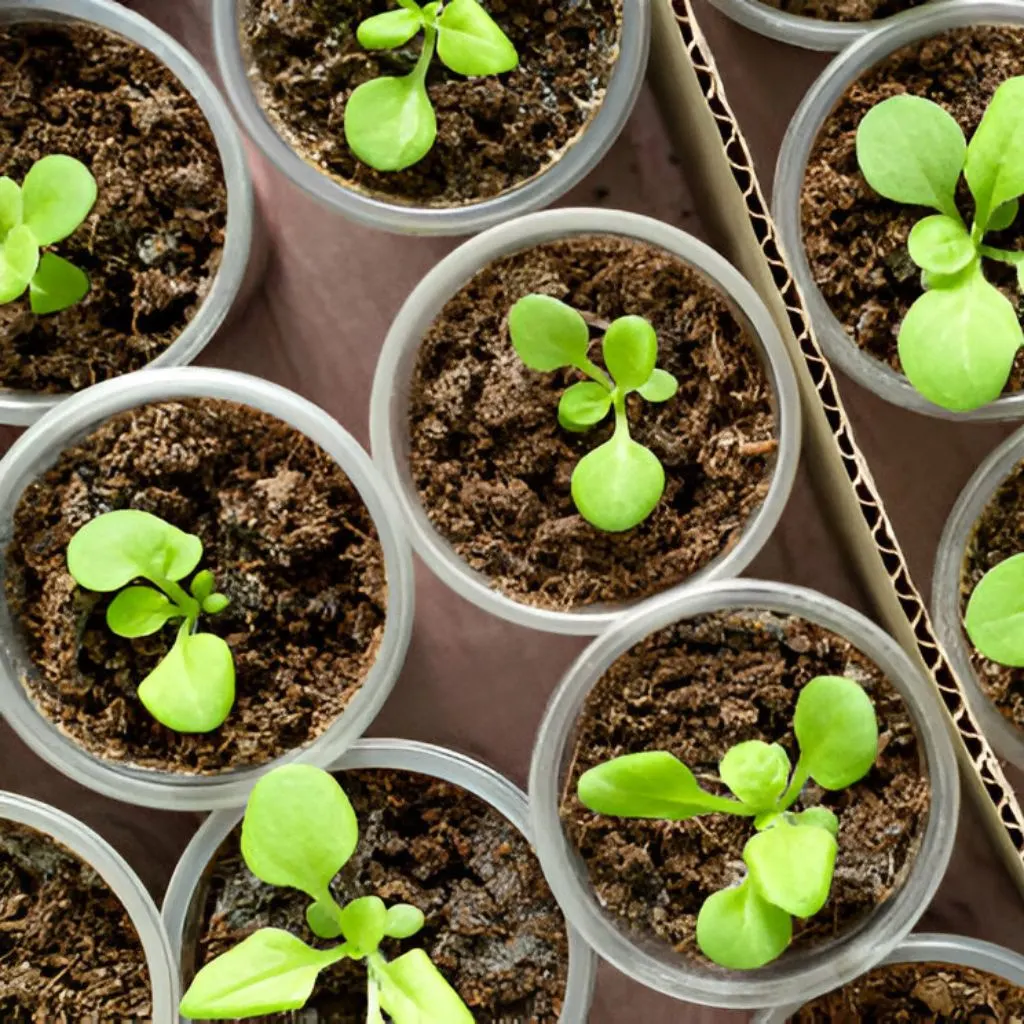
Seed Germination Process
Seed Preparation: Zinnia seeds are generally straightforward to grow and do not require any complicated pre-treatment. However, for gardeners aiming to boost germination success, a short pre-soak can be beneficial. Soak the seeds in clean water for 1–2 hours before sowing. This helps soften the seed coat slightly, allowing quicker water absorption and supporting faster sprouting. Avoid soaking for longer periods because it may encourage fungal growth or seed rot.
Planting Medium: Zinnia seeds perform best in a light, airy, and well-draining potting mix. The ideal germination medium includes:
- Peat or cocopeat
- Perlite or sand
- Vermicompost
A recommended formula is: 40% cocopeat + 30% compost + 30% perlite
Ensure the mix is moist but not wet, and gently crumble it to remove compacted clumps. Zinnia roots spread quickly, so loose soil significantly improves early root development.
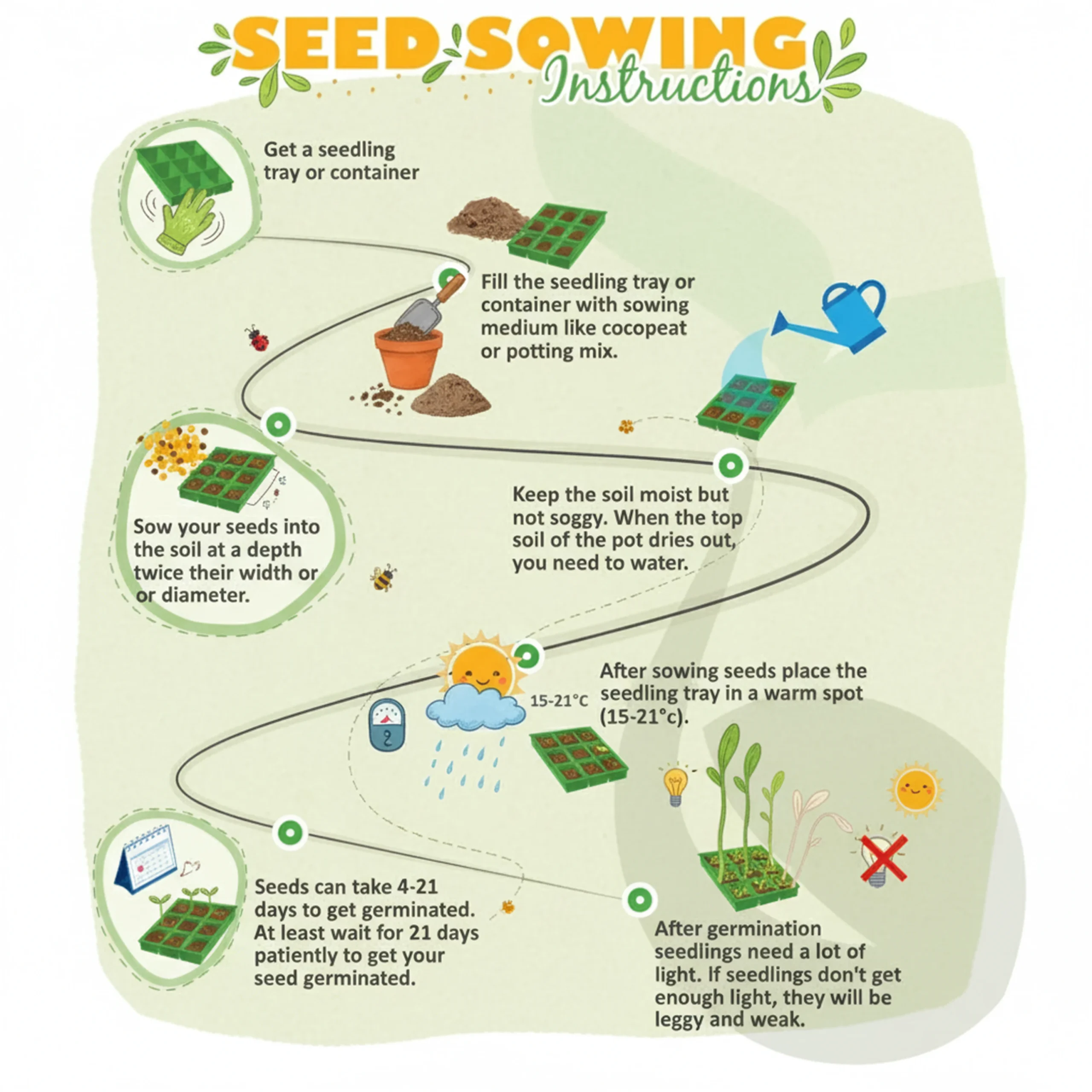
Planting the Seeds: Prepare seed trays, small pots, grow bags, or a well-worked garden bed. Fill them with your prepared potting mix, leaving a small gap at the top.
- Sow the seeds on the surface of the soil.
- Zinnia seeds require light to germinate, so do not bury them deeply.
- Simply press them lightly into the soil to ensure strong seed-to-soil contact.
- If sowing outdoors, choose an area where soil remains warm and lightly moist.
- Spacing is important:
- Seed trays: 1 seed per cavity
- Garden bed: Sow seeds 6–8 inches apart
- Pots: You can sow 3–4 seeds in a medium pot, thinning to one strong seedling later
Containers: Zinnias can be started in almost any container, but good drainage is essential. Suitable containers include:
- Plastic nursery trays
- Biodegradable seedling cups
- 3–6 inch pots
- Fabric grow bags
- Outdoor raised beds
Ensure the container has multiple drainage holes to prevent waterlogging, which is a major cause of seed rot.
Watering During Germination: Zinnia seeds prefer consistent moisture but cannot tolerate standing water.
- Use a fine mist spray to moisten the soil.
- Avoid heavy watering that may wash the seeds away.
- Keep the surface evenly moist, especially during the first 7–10 days.
Overwatering at this stage can cause fungal rot, damping-off disease, or mold, so moderation is key.
Ideal Temperature for Germination: Zinnia seeds germinate best at warm temperatures.
The optimal temperature range is: 21–24°C (70–75°F)
If you live in a cooler region or are growing during early spring, you can use:
- Seedling heat mats
- Warm indoor windowsills
- Greenhouse environments
Maintaining stable warmth significantly improves germination speed and success.
Light Requirement During Germination: Zinnias sprout faster under good light. Indoors, seedlings may elongate and weaken if light is insufficient.
- Provide 12–14 hours of bright light daily.
- Use LED grow lights if natural sunlight is limited.
- Avoid placing trays under direct harsh sunlight initially, as this may dry the seeds rapidly.
Once the seedlings emerge, gradually introduce them to stronger light.
Germination Time: Zinnia seeds typically sprout in: 7–14 days. However, germination may occur earlier (as quickly as 4–5 days) under optimal temperature and moisture conditions.
Soil Requirement
Zinnias are adaptable plants, but they perform exceptionally well in rich, well-draining, aerated soil.
Loosen Soil: Whether growing in pots or garden beds, loosen soil to at least 12 inches (30 cm) deep to support root growth. Aerated soil allows:
- Strong root development
- Faster nutrient uptake
- Better drainage
Soil Composition Recommendations:
For garden beds:
- 40% garden soil
- 30% compost
- 20% sand/perlite
- 10% cocopeat
For pots or containers:
- 50% potting mix
- 25% compost or vermicompost
- 25% perlite or coarse sand
Zinnias dislike heavy clay soils or areas prone to waterlogging.

Fertilizer Requirements
Organic Fertilizer Options: Zinnias respond beautifully to organic matter. You can use:
- Compost
- Well-rotted cow dung manure
- Vermicompost
- Banana peel fertilizer (high in potassium)
- Bone meal (supports flowering)
Organic fertilizers improve long-term soil health and microbial activity.
Fertilizer Application Schedule
- Flowering stage: Switch to a fertilizer higher in phosphorus and potassium.
- Seedlings: Apply mild liquid seaweed or vermicompost tea every 10–15 days.
- Young plants: Fertilize every 4–6 weeks during the growing season (spring to late summer).
Inorganic Fertilizer: Use a balanced, water-soluble fertilizer such as:
NPK 19:19:19 or NPK 20:20:20
This helps promote:
- Strong foliage
- Vigorous growth
- Healthy flowers
Apply fortnightly in diluted form for container plants and monthly for ground-grown plants.
A bloom booster like NPK 10:30:20 can be used once every 3–4 weeks for heavy flowering.
Avoid Over-Fertilizing: Too much nitrogen results in:
- Excess leafy growth
- Few or no flowers
- Weak stems
- Susceptibility to pests
Pot and Planter Requirements
Zinnias can be grown in:
- 6–10 inch pots
- 1–2 ft deep grow bags
- Raised beds
- Balcony planters
- Outdoor garden beds
Pot Size Based on Variety
- Dwarf varieties (6–12 inches tall): 6-inch pots
- Medium varieties (12–24 inches tall): 8-inch pots
- Tall varieties (2–3 feet tall): 10–12 inch pots or large grow bags
Make sure pots have multiple drainage holes.

Watering Requirements
Frequency:
- Newly planted zinnias: Water daily or every alternate day depending on heat.
- Established plants: Once a week deep watering is ideal.
- Hot summers: Increase frequency to maintain consistent soil moisture.
- Rainy season: Reduce watering significantly.
Watering Technique: Water deeply to encourage root penetration. Deep roots make the plant more drought-tolerant and resistant to wind damage.
Always water at the base of the plant, not on the leaves. Avoid overhead watering because wet foliage promotes fungal diseases like powdery mildew.
Soil Moisture: Allow the top 1 inch of soil to dry before watering again. Zinnias cannot tolerate soggy soils, and root rot may occur. Check moisture by inserting your finger or using a moisture meter.
Watering Containers: Potted zinnias dry faster due to limited soil volume. Check daily, especially in summer. Ensure pots have excellent drainage Use mulching (cocopeat, dry leaves, straw) to reduce evaporation
Sunlight Requirements
Zinnia plants are sun-loving and perform best under full sun.
- Provide 6–8 hours of direct sunlight daily
- Low light leads to:
- Leggy, weak plants
- Fewer flowers
- Higher disease susceptibility
Zinnias can handle intense summer sun and heat, making them ideal for Indian climates.

Pest Control Requirement
Zinnias are relatively hardy but can be attacked by several pests and diseases.
1. Aphids: Aphids suck plant sap, causing:
- Yellow leaves
- Stunted growth
- Sticky honeydew residue
Control using:
- Neem oil spray (weekly)
- Insecticidal soap
- Washing with water spray to dislodge them
2. Spider Mites: Common in hot, dry conditions. Signs include:
- Webbing
- Tiny white/yellow specks on leaves
Control:
- Increase humidity
- Use neem oil or miticides
- Spray plants with water daily in dry weather
3. Caterpillars: They chew leaves and flowers.
- Handpick them
- Use Bt (Bacillus thuringiensis) for organic control
4. Powdery Mildew: This is the most common zinnia disease.
Symptoms:
- White powder-like coating on leaves
- Leaf curling
- Reduced flowering
Prevention:
- Provide good airflow
- Avoid overhead watering
- Space plants properly
Treatment:
- Neem oil
- Organic fungicides
- Baking soda spray (1 tsp baking soda + 1 liter water)
5. Root Rot: Caused by excess watering and poor drainage.
Prevention:
- Allow soil to dry between waterings
- Use well-draining soil
- Avoid waterlogging
General Plant Care
Pinching: Once seedlings are 4–6 inches tall, pinch off the top growth. This encourages:
- Bushier plants
- More branching
- More flowers
Deadheading: Remove dried flowers regularly to:
- Promote continuous blooming
- Prevent seed formation (which slows flowering)
Mulching: Use organic mulches to:
- Retain moisture
- Protect roots
- Reduce weeds
- Improve soil quality
Spacing: Proper spacing prevents fungal diseases.
Recommended spacing:
- Dwarf varieties: 6–8 inches
- Medium varieties: 10–12 inches
- Tall varieties: 12–18 inches
Staking (For Tall Varieties): Tall zinnia types may need light staking to prevent bending during winds.
FAQs
Can I grow zinnias from seed easily?
Yes — zinnias are among the easiest annual flowers to grow from seed. Many guides say you can sow seeds directly in warm soil and expect germination within a week.
Tips:
Ensure soil is warm (at least about 70 °F or ~21 °C) for best germination.
Plant seeds ~¼ inch (≈6 mm) deep.
Provide full sun, well-drained soil.
When and where should I sow zinnia seeds?
Outdoors: sow after the last frost, when soil has warmed.
Indoors (optional): Start seeds 4-6 weeks before the last frost for earlier blooms.
Choose a location with full sun (at least 6 hours of direct sun) and good drainage.
How far apart should I plant zinnias, and how deep?
Seed depth: about ¼ inch (≈6 mm) deep is standard.
Spacing: depends on variety. Some sources: 6–12 inches (≈15–30 cm) apart for smaller types; 12–18 inches (≈30–45 cm) or more for tall varieties.
Also thin seedlings when small to improve airflow.
What kind of soil, water and care do zinnias need?
Soil: Well-draining, enriched with compost for best growth.
Watering: Keep the soil evenly moist while seedlings are young. Once established, zinnias are quite drought tolerant but still appreciate regular watering. Avoid over-watering.
Care: Deadhead spent flowers to encourage more blooms. Also, ensure good air circulation to avoid fungal issues (e.g., powdery mildew).
How long until zinnias bloom, and how long will they bloom?
Germination typically in about 4–7 days (or slightly more) when conditions are good. Blooming from seed: depending on variety and conditions, blooms can appear perhaps 6-8 weeks after sowing. Zinnias generally bloom from mid‐summer until the first hard frost (since they are annuals).
Can zinnias grow in containers/pots or only in garden beds?
Yes — zinnias can be grown in containers or planters. However, choose dwarf or compact varieties for pots to avoid plants getting too tall or top-heavy. Make sure the container has good drainage.
How do I save my own zinnia seeds for next year?
Wait until flower heads fade and dry/brown.
Cut the seed heads, let them dry fully (hanging upside down or in a dry place).
Extract the seeds: look for firm arrow-shaped seeds inside. Store them in a cool, dry place until next planting season.
Note: If you used hybrid varieties, saved seeds may not yield the same colours or traits.
What problems/pests/diseases should I watch out for with zinnias?
Powdery mildew: Especially in humid, poorly ventilated conditions. Good airflow, avoiding wetting foliage, helps.
Overcrowding: Can reduce airflow and increase disease risk.
Pests such as aphids or Japanese beetles may attack, though zinnias are relatively hardy.
Overwatering or planting in poorly drained soil can cause root/stem rot.
What fertilizers should I use for zinnias, and how often?
Use a fertilizer with a higher phosphorus content (the middle number in N-P-K), e.g., 5-10-5 or 10-20-10 to boost blooming.
In India (or warm growing climates), you can apply a balanced fertiliser (e.g., 10-10-10) every ~2-3 weeks during the growing season.
Avoid over-fertilisation: too much nitrogen will promote foliage but fewer flowers.
Timing: Begin when the seedlings are established; stop heavy fertilising late in the season.
Tip for Indian gardens: Use well-rotted cowdung or chicken manure as organic base, and supplement with seaweed extract or fish emulsion if available.
How do I encourage a longer blooming season (and more flowers)?
Deadheading (removing spent blooms) encourages the plant to produce more flowers rather than go to seed.
Pinching back the main stem when plants are young (for branching) helps get bushier plants and more flower heads.
Succession sowing: Sow seeds every few weeks so when one batch finishes, another begins — extends the season.
Planting compact/dwarf varieties in pots or border, plus taller ones in beds, gives continuous flowers. Variety-selection matters.
Regular feeding (see fertiliser answer above) and good light will keep blooms coming.
Are there companion plants or neighbours I should avoid planting near zinnias?
Yes — some plants may interfere with the growth of zinnias by competing for nutrients, water, sunlight or by encouraging pests/diseases.
Examples of plants to avoid near zinnias: aggressive ground-covers (mint), heavy-feeding crops (tomatoes, cucumbers) or large tall plants that shade them.
Choose neighbours that complement zinnias: plants that like full sun but moderate moisture, and don’t crowd them.


Reviews
There are no reviews yet