
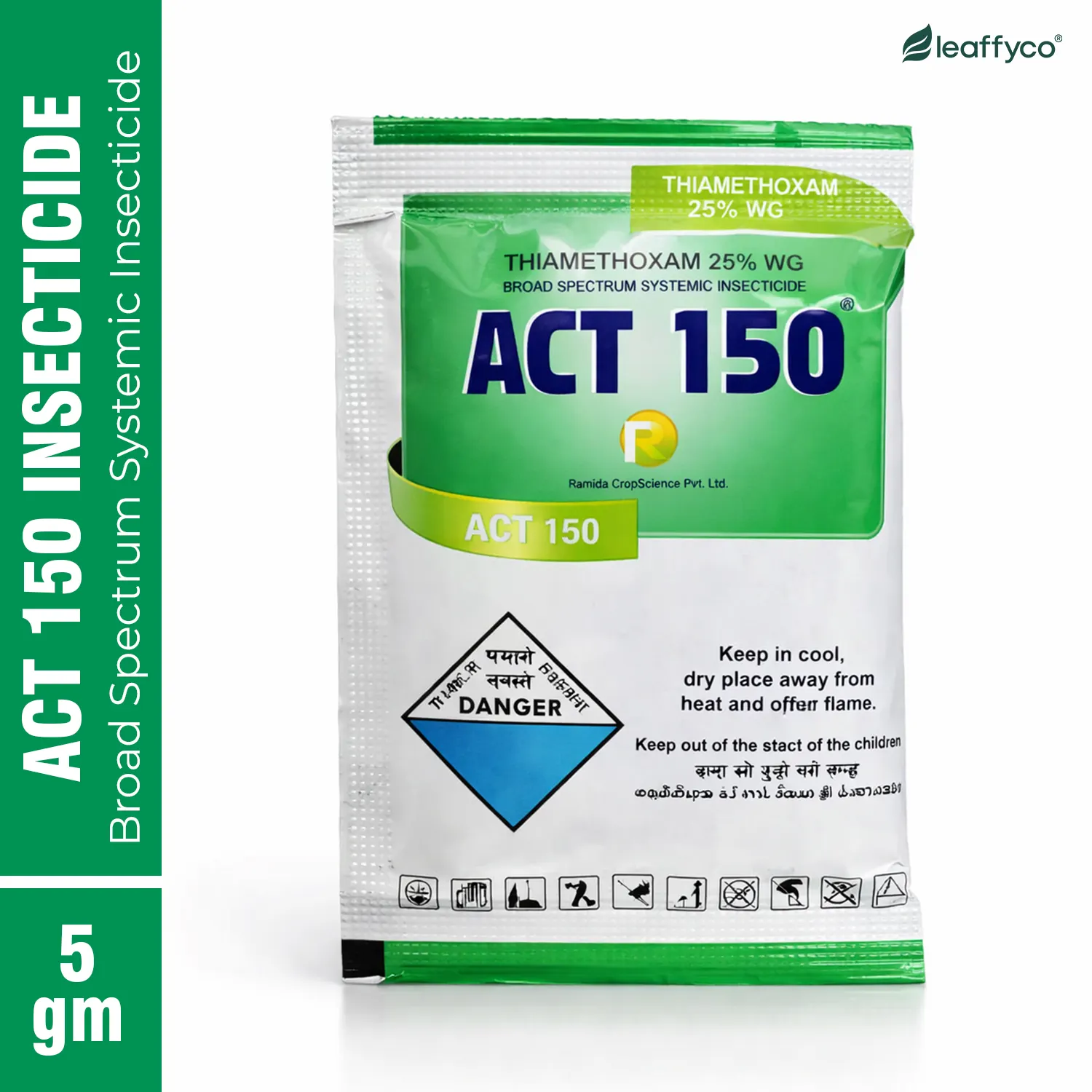
ACT 150 Insecticide is an advanced broad-spectrum systemic insecticide formulated with Thiamethoxam 25% WG, one of the most trusted active ingredients from the neonicotinoid group. Designed for modern agriculture, ACT 150 offers rapid control of destructive sucking and chewing pests while delivering long-lasting residual protection to crops.
Farmers across India continuously face severe yield losses due to insect infestations such as aphids, whiteflies, jassids, stem borers, thrips, leaf folders, psylla, and plant hoppers. These pests not only damage crops directly but also spread dangerous viral diseases that reduce crop quality and productivity. ACT 150 provides an effective solution by delivering quick systemic action and superior translaminar movement throughout the plant.
Thanks to its unique mode of action, ACT 150 effectively controls even hidden insects present beneath leaves or inside plant tissues. It is highly suitable for integrated pest management (IPM) programs and is widely recommended for crops including rice, cotton, tomato, potato, tea, okra, mustard, cumin, mango, citrus, wheat, and brinjal.
If you are searching for the best Thiamethoxam 25 WG insecticide, systemic insecticide for sucking pests, or a reliable insecticide for resistant pests, ACT 150 is an excellent choice for professional farmers and home growers alike.
Technical Details of ACT 150 Insecticide
- Technical Name: Thiamethoxam 25% WG
- Formulation Type: WG (Water Dispersible Granules)
- Chemical Group: Neonicotinoid Insecticide
Recommended Dosage and Mode of Action
100 gm per acre
ACT 150 acts as an agonist of the nicotinic acetylcholine receptors (nAChRs) in the insect nervous system.
The active ingredient interferes with nerve signal transmission and causes irreversible blockage of postsynaptic nAChRs. This results in:
- Hyperexcitation
- Convulsions
- Paralysis
- Death of the insect
Its dual action through stomach and contact activity ensures rapid pest mortality and long-lasting plant protection.
Method of Application
- Foliar spray
Spray Instructions
- Dissolve the required quantity in clean water
- Mix thoroughly before spraying
- Spray uniformly on both upper and lower leaf surfaces
- Use recommended spray equipment for proper coverage
Best Time to Spray
- Early morning or evening hours
- Spray during initial pest infestation for best results
Key Features of ACT 150 Insecticide
- Powerful Systemic Action: ACT 150 is rapidly absorbed by roots and leaves and translocated throughout the plant system. This ensures complete crop protection from the inside.
- Excellent Translaminar Movement: The insecticide penetrates leaf tissues and controls hidden pests residing under leaves and within plant parts.
- Broad-Spectrum Pest Control: ACT 150 controls a wide range of sucking and chewing insects in multiple crops.
- Long Residual Activity: It offers extended protection against recurring pest attacks, reducing the need for repeated spraying.
- Quick Knockdown Effect: The formulation acts rapidly on insects and stops feeding almost immediately after exposure.
- Effective Against Resistant Pests: ACT 150 is highly effective on insect populations that have developed resistance to conventional insecticides.
- Improves Crop Health & Yield: By protecting crops during critical growth stages, ACT 150 helps maximize productivity and crop quality.
Benefits of Using ACT 150 Insecticide
Using ACT 150 regularly as part of a proper crop protection schedule offers numerous advantages:
- Controls sucking pests effectively
- Reduces crop damage
- Prevents virus transmission by insects
- Ensures greener and healthier crops
- Improves flowering and fruit setting
- Enhances crop vigor
- Minimizes yield losses
- Reduces frequency of spraying
- Suitable for foliar application
- Provides economical pest management
Crops Recommended for ACT 150 Insecticide
ACT 150 can be used across a wide range of agricultural and horticultural crops.
- Rice (Nursery)
- Cotton
- Tomato
- Potato
- Brinjal
- Tea
- Mango
- Citrus
- Okra
- Wheat
- Mustard
- Cumin
Pests Controlled by ACT 150 Insecticide
ACT 150 effectively controls the following pests:
Rice Pests
- Stem Borer
- Gall Midge
- Leaf Folder
- Brown Plant Hopper (BPH)
- White Backed Plant Hopper (WBPH)
- Green Leaf Hopper
- Whorl Maggot
Cotton Pests
- Aphids
- Whitefly
- Jassids
- Thrips
Vegetable Crop Pests
- Aphids
- Whiteflies
- Thrips
- Jassids
Fruit Crop Pests
- Psylla
- Mosquito Bug
- Hoppers
How ACT 150 Insecticide Works Inside the Plant
Once sprayed, ACT 150 quickly enters the plant tissues through leaves and roots. The active ingredient moves upward through the xylem and distributes evenly throughout the plant.
When insects feed on treated plants, the nervous system is disrupted immediately. Feeding stops within a short period, and insects eventually die due to paralysis.
This systemic movement ensures protection even in newly emerging plant parts.
Why Farmers Prefer ACT 150 Insecticide Over Conventional Insecticides
Farmers prefer ACT 150 because it combines:
- Fast action
- Long residual effect
- Broad-spectrum activity
- Excellent systemic movement
- Low application dose
- Superior crop safety
Compared to ordinary contact insecticides, ACT 150 reaches hidden insects that are difficult to control with surface sprays.
Crop-Wise Usage Guide
- ACT 150 for Rice: Rice crops suffer heavily from stem borers, leaf folders, and hoppers. ACT 150 provides excellent protection during nursery and vegetative stages.
- Benefits in Rice:
- Stops hopper damage
- Reduces dead hearts caused by stem borers
- Protects leaf tissues
- Promotes healthy tillering
- Benefits in Rice:
- ACT 150 for Cotton: Cotton is highly vulnerable to sucking pests such as aphids, jassids, thrips, and whiteflies.
- Benefits in Cotton:
- Reduces leaf curling
- Prevents sap sucking damage
- Maintains plant vigor
- Supports better boll formation
- Benefits in Cotton:
- ACT 150 for Tomato & Brinjal: Vegetable crops are often attacked by whiteflies and aphids that spread viral diseases.
- Benefits in Vegetables:
- Protects tender shoots
- Reduces viral transmission
- Improves fruit quality
- Supports healthy vegetative growth
- Benefits in Vegetables:
- ACT 150 for Mango & Citrus: Fruit crops face severe damage from hoppers, psylla, and mosquito bugs.
- Benefits in Fruit Crops:
- Protects flowering shoots
- Improves fruit retention
- Reduces pest population quickly
- Benefits in Fruit Crops:
Compatibility of ACT 150 Insecticide
ACT 150 is compatible with many commonly used fungicides and insecticides. However:
- Always perform a jar compatibility test before mixing
- Avoid mixing with highly alkaline products
- Follow label recommendations carefully
Safety Precautions While Using ACT 150 Insecticide
- Wear gloves and protective clothing
- Avoid inhalation during mixing and spraying
- Do not eat, drink, or smoke during application
- Keep away from children and animals
- Wash hands thoroughly after use
Storage Instructions
- Store in a cool and dry place
- Keep away from direct sunlight
- Store in original sealed packaging
- Keep away from food and animal feed
Integrated Pest Management (IPM) with ACT 150 Insecticide
ACT 150 can be integrated effectively into IPM programs.
Best Practices
- Monitor pest population regularly
- Spray at economic threshold level (ETL)
- Rotate with insecticides having different modes of action
- Use balanced fertilization
- Avoid unnecessary spraying
This approach helps delay resistance development and maintains long-term efficacy.
Advantages of Thiamethoxam 25% WG
Thiamethoxam is globally recognized for its superior insecticidal performance.
Major Advantages
- Fast systemic movement
- Excellent water solubility
- Effective at low doses
- Broad-spectrum activity
- Longer persistence
- Better plant absorption
Final Words
ACT 150 Insecticide is an advanced crop protection solution designed for modern farming needs. Powered by Thiamethoxam 25% WG, it offers rapid action, systemic movement, long-lasting residual control, and superior effectiveness against resistant insect populations.
Whether you are growing rice, cotton, vegetables, fruits, or plantation crops, ACT 150 provides dependable protection against destructive pests while helping improve crop health and yield potential.
For farmers looking for the best systemic insecticide for sucking pests and chewing insects, ACT 150 stands out as a reliable and economical choice.
Frequently Asked Questions (FAQs)
What is ACT 150 Insecticide used for?
ACT 150 is used for controlling sucking and chewing pests such as aphids, whiteflies, jassids, thrips, stem borers, hoppers, and psylla in multiple crops.
What is the active ingredient in ACT 150?
ACT 150 contains Thiamethoxam 25% WG.
Is ACT 150 systemic?
Yes, ACT 150 is a highly systemic insecticide with excellent translaminar movement.
What is the dosage of ACT 150?
The recommended dosage is 100 grams per acre.
Which crops can ACT 150 be used on?
It can be used on rice, cotton, tomato, potato, mango, citrus, tea, okra, brinjal, mustard, wheat, cumin, and several other crops.
Reviews
There are no reviews yet