
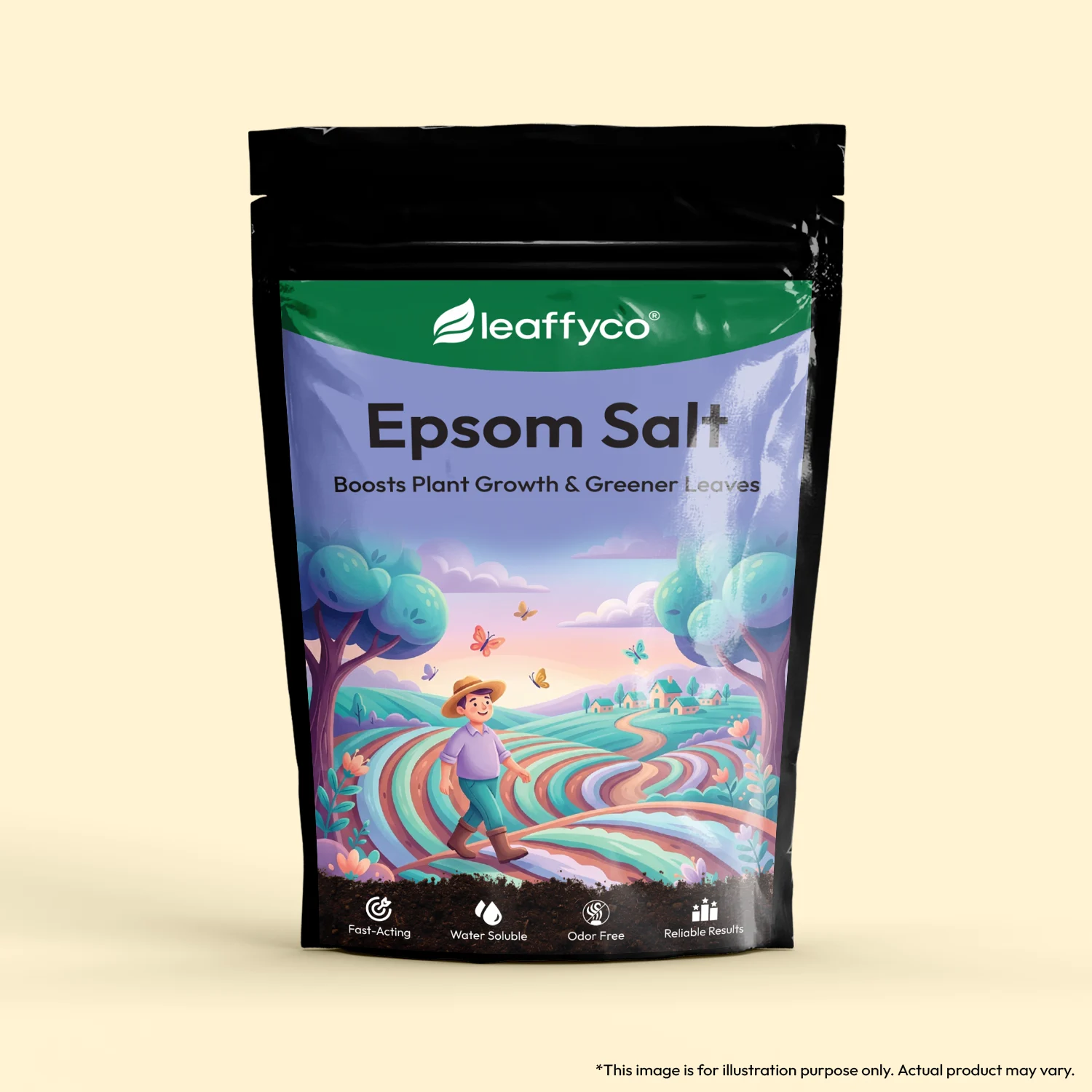
Epsom Salt for Plants is one of the most trusted gardening supplements used by home gardeners, terrace gardeners, plant enthusiasts, and professional growers around the world. Made from pure Magnesium Sulphate (MgSO₄), Epsom Salt provides two essential plant nutrients—magnesium and sulfur—which play important roles in chlorophyll production, nutrient uptake, photosynthesis, and overall plant health.
Whether you grow vegetables, flowering plants, fruit trees, roses, herbs, indoor plants, or container gardens, Epsom Salt can be a valuable addition to your gardening routine when magnesium deficiency is present. It dissolves quickly in water and can be applied through soil drenching, foliar sprays, or incorporated into garden beds.
Unlike traditional NPK fertilizers, Epsom Salt does not provide nitrogen, phosphorus, or potassium. Instead, it serves as a specialized nutrient supplement designed to support healthy plant development and improve magnesium availability in the soil. Magnesium is a central component of chlorophyll, the pigment responsible for capturing sunlight and producing energy through photosynthesis. Sulfur contributes to enzyme activity, protein formation, and overall plant vigor.
What is Epsom Salt?
Epsom Salt is a naturally occurring mineral compound known scientifically as Magnesium Sulfate. It contains approximately 10% magnesium and 13% sulfur, making it an excellent source of these two important secondary nutrients for plants.
For decades, gardeners have used it to support vegetables, flowering plants, roses, peppers, tomatoes, lawns, shrubs, and indoor plants. While it is not a replacement for balanced fertilizers, it can help address magnesium deficiencies and support healthy growth in certain growing conditions.
Benefits of Epsom Salt for Plants
- Supports Greener Leaves: Magnesium is a critical component of chlorophyll. Adequate magnesium levels help plants maintain rich green foliage and efficient photosynthesis. Plants experiencing magnesium deficiency often show yellowing between leaf veins, especially on older leaves.
- Helps Improve Nutrient Uptake: Magnesium assists plants in utilizing essential nutrients more effectively. Proper magnesium availability can support the uptake and utilization of nutrients already present in the soil and fertilizer program.
- Encourages Healthy Flowering: Flowering plants require adequate nutrition to produce abundant blooms. Magnesium contributes to overall plant energy production and may support healthier flowering performance when deficiencies are corrected.
- Beneficial for Vegetables: Tomatoes, peppers, and other vegetable crops are often associated with magnesium supplementation. Container-grown vegetables and nutrient-depleted soils may benefit from Epsom Salt applications when magnesium levels are low.
- Supports Container Plants: Potted plants and container gardens can experience nutrient depletion more quickly than plants grown in open ground. Epsom Salt can help replenish magnesium levels when required.
- Easy to Use: It dissolves rapidly in water, making it convenient for foliar feeding, soil drenching, and hydroponic nutrient programs.
- Highly Soluble and Fast Acting: Because magnesium sulfate is water-soluble, plants can absorb it relatively quickly when applied appropriately.
Signs of Magnesium Deficiency in Plants
Your plants may benefit from magnesium supplementation if you notice:
- Yellowing between leaf veins
- Pale green leaves
- Slow growth
- Poor flowering
- Reduced vigor
- Leaf curling
- Premature leaf drop
However, similar symptoms can result from other nutrient issues, so soil testing is recommended whenever possible.
How to Use Epsom Salt for Plants
- Soil Application: Mix it into irrigation water and apply around the root zone.
- Recommended Rate:
- 1 tablespoon per gallon (4 liters) of water
- Apply every 3–4 weeks during active growth
- Recommended Rate:
- Foliar Spray Dissolve:
- 1–2 tablespoons Epsom Salt per gallon of water
- Spray directly on foliage during early morning or evening hours.
- Garden Bed Application
- For vegetable gardens: Apply approximately 1 cup per 100 square feet and mix into soil before planting.
- Epsom Salt for Tomato Plants: Tomatoes are among the most popular crops for Epsom Salt applications. Magnesium helps support chlorophyll production and healthy foliage. Gardeners frequently use diluted magnesium sulfate solutions during the growing season, especially when deficiency symptoms appear. However, It should not be used as a substitute for balanced tomato fertilizer.
- Epsom Salt for Roses: Rose growers have used Epsom Salt for many years as part of their feeding routine. Magnesium supports healthy foliage and may contribute to vigorous growth when magnesium levels are insufficient. Research and gardener observations suggest that correcting deficiencies can improve plant performance.
- Epsom Salt for Indoor Plants: Indoor plants grown in containers can sometimes develop magnesium deficiencies due to repeated watering and nutrient depletion. Occasional Epsom Salt supplementation may help restore nutrient balance when deficiency symptoms occur.
Why Choose Our Premium Epsom Salt?
- High Purity Magnesium Sulphate: It contains premium-grade magnesium sulfate suitable for gardening applications.
- Fast Dissolving Formula: Dissolves quickly in water for easy preparation of foliar sprays and soil drenches.
- Suitable for Multiple Plant Types: Works with vegetables, flowers, fruit plants, herbs, indoor plants, shrubs, and ornamental gardens.
- Easy Storage: Packed in moisture-resistant packaging for long-lasting freshness.
- Cost Effective: A small quantity can prepare multiple gallons of nutrient solution, making it highly economical for gardeners.
Precautions
- Do not overapply.
- Avoid using as a replacement for balanced fertilizers.
- Conduct soil testing whenever possible.
- Use only plain, additive-free Epsom Salt for plants.
- Follow recommended dosage rates.
Final Words
Give your plants the magnesium and sulfur support they need with Premium Epsom Salt for Plants. Whether you are growing vegetables, flowering plants, roses, herbs, or indoor plants, this versatile gardening supplement can help maintain healthy growth, greener foliage, and improved plant vigor when magnesium deficiencies occur.
Add it to your gardening toolkit today and provide your plants with one of the most widely used mineral supplements trusted by gardeners worldwide.
Frequently Asked Questions (FAQs)
What is Epsom Salt used for in gardening?
It supplies magnesium and sulfur, two nutrients that support plant growth, chlorophyll production, and nutrient utilization.
Can Epsom Salt replace fertilizer?
No. It is not a complete fertilizer because it does not provide nitrogen, phosphorus, or potassium.
Which plants benefit most from Epsom Salt?
Tomatoes, peppers, roses, flowering plants, container plants, and crops experiencing magnesium deficiency may benefit.
How often should I apply Epsom Salt?
Generally every 3–4 weeks during active growth, depending on plant needs and soil conditions.
Is Epsom Salt safe for organic gardening?
Magnesium sulfate is commonly used in gardening and is generally considered safe when applied correctly and in moderation.
Reviews
There are no reviews yet