
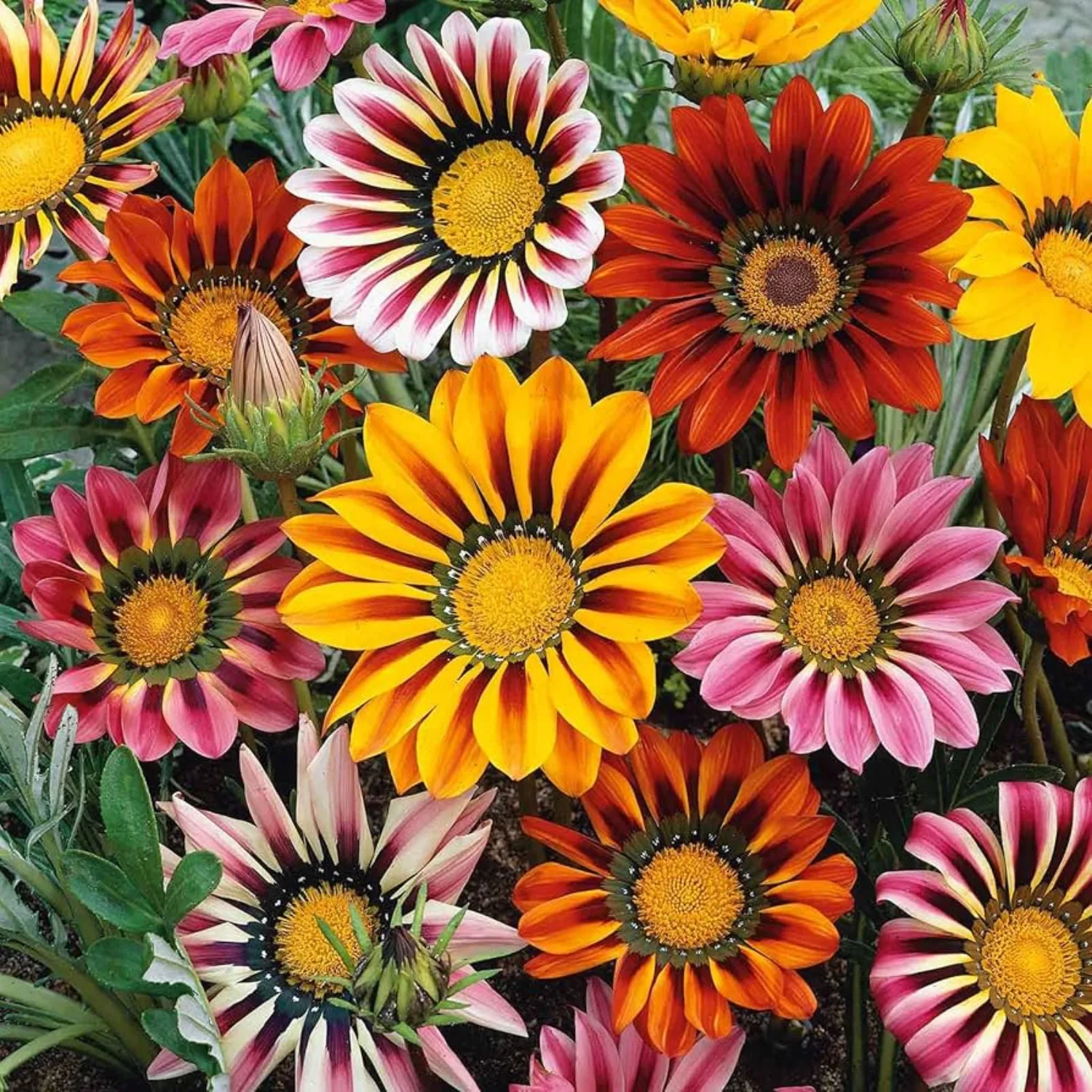
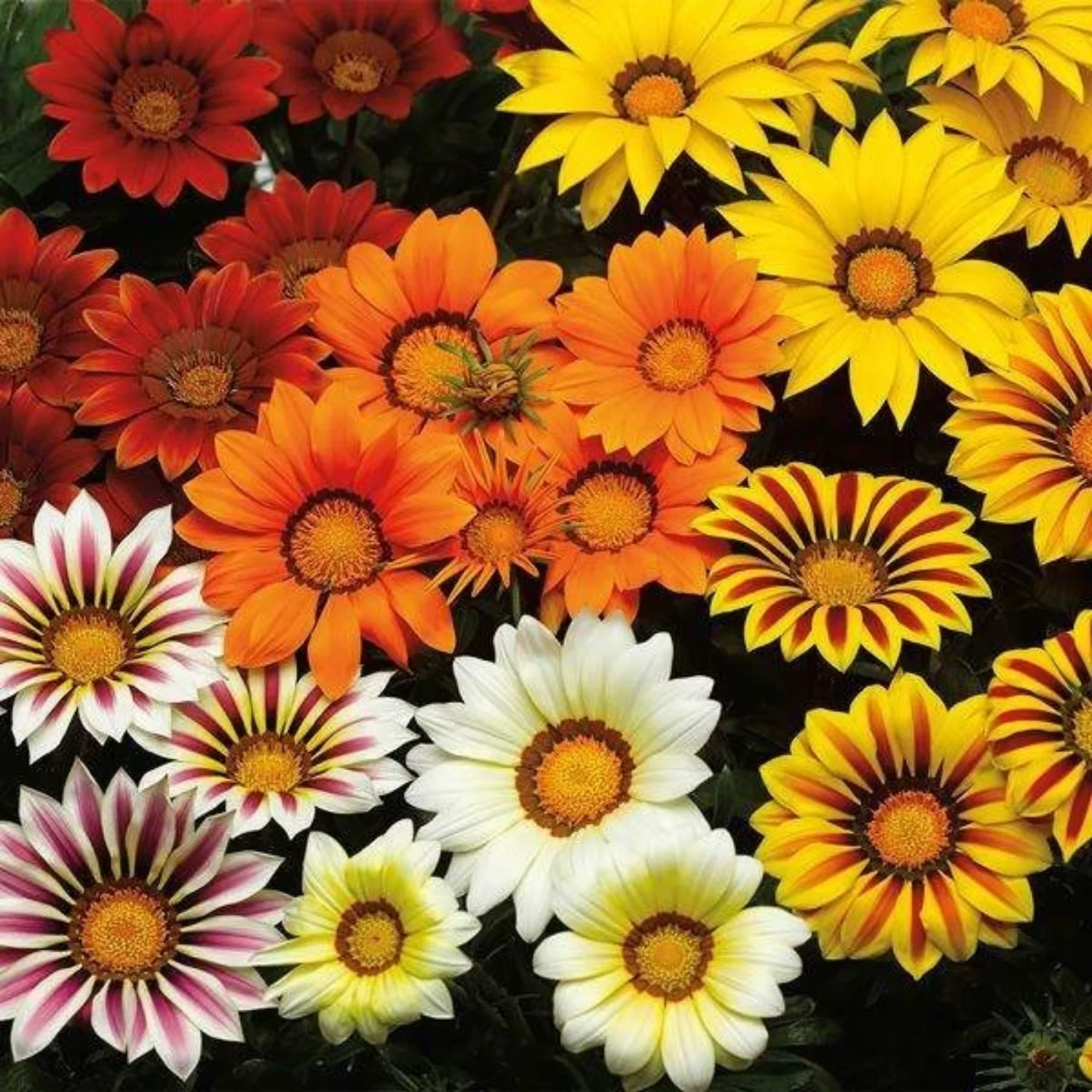
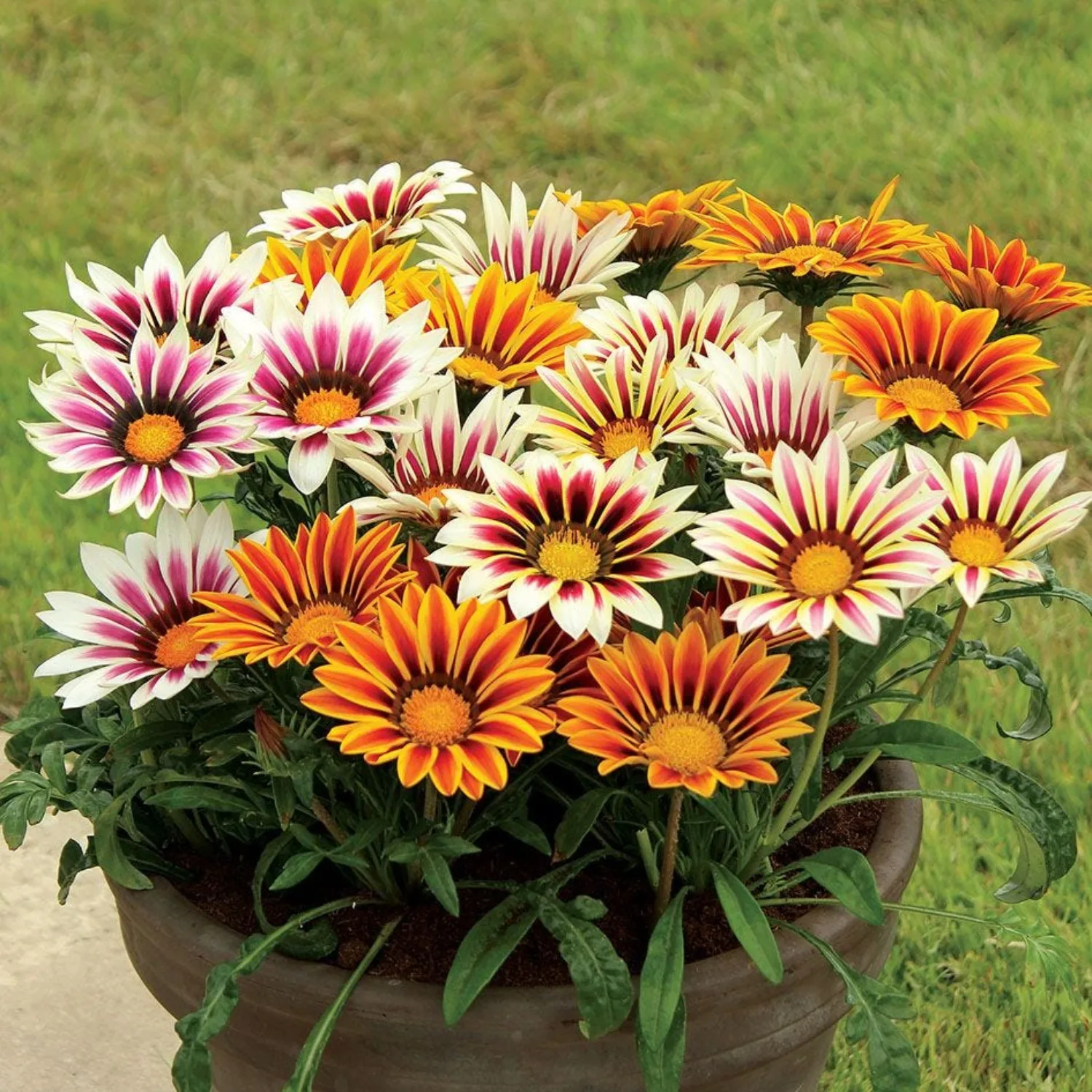
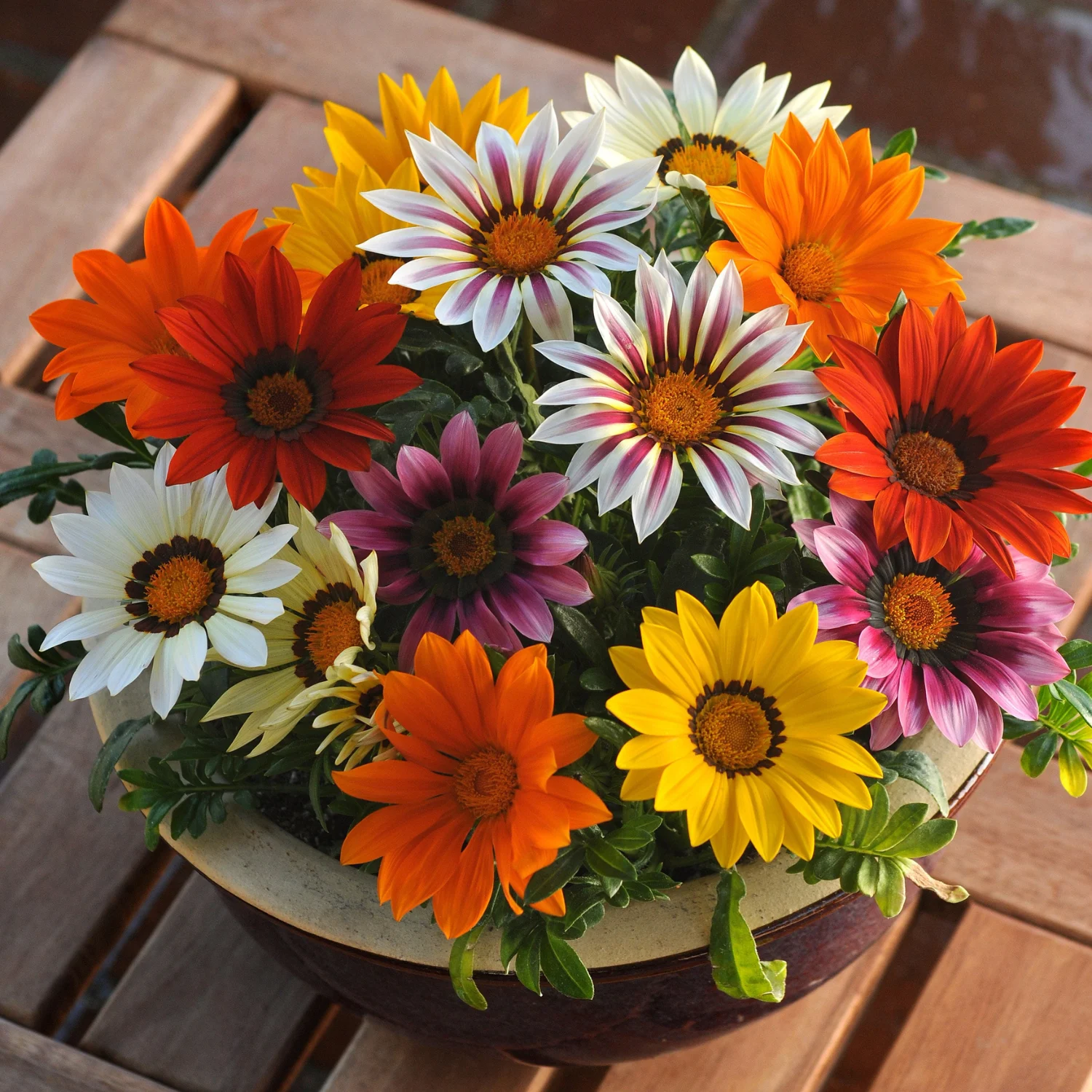


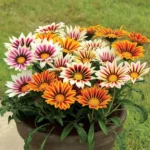

Bring a burst of vibrant colour to your garden with Gazania Flower Seeds, a beautiful and easy-to-grow flowering plant known for its large, daisy-like blooms and attractive foliage. Commonly called the Treasure Flower, Gazania is an excellent choice for Indian gardens, balconies, terraces, pots, containers, borders, rock gardens and sunny outdoor spaces.
Gazania flowers are particularly admired for their brilliant shades of yellow, orange, red, pink and mixed colours, often featuring contrasting rings or markings around the flower centre. Their blooms look especially attractive when planted in groups, making them ideal for creating colourful borders and decorative flower beds.
One of the biggest advantages of growing Gazania is its love for sunlight. The flowers open beautifully in bright sunshine and may remain partially closed during cloudy conditions or low light. Gazania is also relatively drought-tolerant once established, making it a suitable choice for gardeners who want colourful flowers without demanding daily maintenance. Current Indian seed listings commonly describe Gazania as a full-sun, low-maintenance ornamental plant suitable for containers and garden beds.
Whether you are an experienced gardener or growing flowers from seeds for the first time, Gazania flower seeds can be an excellent addition to your collection.
Why Choose Gazania Flower Seeds?
Gazania combines colourful flowers, attractive foliage and relatively easy maintenance in one compact ornamental plant.
Key Benefits
- 🌼 Produces attractive daisy-like flowers
- ☀️ Performs best in full sunlight
- 🌈 Available in vibrant and mixed colours
- 🪴 Suitable for pots, containers and grow bags
- 🌿 Attractive green to grey-green foliage
- 🌱 Suitable for beginner gardeners
- 💧 Relatively drought tolerant after establishment
- 🦋 Can help attract pollinators such as butterflies
- 🌸 Excellent for borders and flower beds
- 🌞 Performs well in bright, sunny outdoor locations
- 🏡 Suitable for balconies, terraces and home gardens
- 🌺 Ideal for creating colourful seasonal displays
Gazania’s compact growth habit also makes it useful for gardeners who have limited space. You can grow it in suitable pots or containers on a sunny balcony or terrace, provided the plant receives enough direct sunlight.
Gazania Flower Seeds – Quick Growing Information
| Growing Factor | Recommended Information |
|---|---|
| Plant Name | Gazania |
| Common Name | Treasure Flower |
| Botanical Name | Gazania |
| Plant Type | Ornamental flowering plant |
| Sunlight | Full Sun |
| Soil | Loose, fertile and well-draining |
| Sowing Method | Direct sowing or seed tray |
| Seed Depth | Very shallow; lightly cover |
| Germination Time | Approximately 7–21 days |
| Spacing | Approximately 20–30 cm, depending on variety |
| Flowering/Harvest | Approximately 80–120 days |
| Watering | Moderate; avoid waterlogging |
| Difficulty Level | Easy to moderate |
| Suitable For | Pots, containers, beds, borders, balconies and terraces |
Germination and flowering times can vary according to seed quality, temperature, variety, soil condition, moisture and growing environment. Indian product listings report germination periods ranging from roughly 7–21 days and maturity/flowering around 80–120 days under suitable conditions.
Sowing Time for Gazania Flower Seeds
Sowing Time for Gazania Flower Seeds
Choosing the right sowing time can make a major difference in germination and flowering performance.
For many parts of India, September to February is a useful growing window for Gazania, particularly in regions with mild winters. Some suppliers recommend different periods depending on the local climate, while warmer regions may provide opportunities for cultivation over a longer period.
Suggested sowing period
September – February: Generally suitable for many Indian plains.
March – April: Can also work in suitable cooler or moderate climates.
The ideal sowing period depends on your local temperature. Avoid extreme heat during the delicate germination stage and avoid frost or very cold conditions.
For gardeners in warmer parts of India, Gazania can potentially be grown outside the traditional season when temperature, sunlight and moisture are managed properly.
Germination Time
Germination Time
Under suitable growing conditions, Gazania seeds generally germinate within approximately 7–21 days.
Some current Indian listings report germination in around 7–14 days, while other sources report approximately 8–18 days or up to three weeks depending on growing conditions.
Don’t worry if every seed does not emerge on exactly the same day. Temperature, moisture, sowing depth, seed freshness and soil conditions can all influence germination.
Germination Process – How to Grow Gazania from Seeds
Germination Process – How to Grow Gazania from Seeds
Growing Gazania flower seeds is relatively straightforward when you provide the seeds with the right environment.
Step 1: Select the Right Container
Gazania can be grown directly in:
- Pots
- Grow bags
- Planters
- Flower beds
- Garden borders
- Seedling trays
If you are growing in a container, select a pot with proper drainage holes. Avoid containers that allow water to remain trapped around the roots.
Step 2: Prepare the Growing Medium
Use a light and well-draining growing medium.
A simple mixture can contain:
- Garden soil
- Compost or vermicompost
- Cocopeat
- Coarse sand or another drainage material
The objective is to create soil that retains enough moisture for germination but drains excess water quickly.
Heavy, compacted soil can cause poor root development and increase the risk of fungal problems.
Step 3: Sow the Seeds
Gazania seeds should be sown very shallowly.
Place the seeds over the prepared soil and cover them only lightly with fine soil or growing medium. Some growing guides recommend surface sowing or barely covering the seeds.
Avoid burying the seeds too deeply.
Step 4: Water Gently
After sowing, moisten the soil gently using a fine rose watering can or spray bottle.
The soil should remain lightly moist—not soaked.
Excessive water can reduce aeration and encourage fungal problems.
Step 5: Provide Suitable Temperature
A moderate temperature is beneficial for germination. One current Indian listing recommends approximately 21–25°C for Gazania seed germination.
Step 6: Wait for Seedlings
Depending on the conditions, seedlings may begin appearing within approximately one to three weeks.
Once seedlings develop several true leaves, they can be transplanted carefully if they were started in a seed tray.
Important Germination Tip
Do not keep moving or disturbing the soil every day to check whether the seeds have germinated. Gazania seeds are small, and unnecessary disturbance can interfere with emerging roots.
Sunlight Requirement for Gazania
Sunlight is one of the most important requirements for Gazania.
For vigorous growth and abundant flowering, place Gazania where it receives full direct sunlight.
Ideally, provide around 6–8 hours of good sunlight whenever possible.
Gazania flowers are particularly responsive to bright light. Their daisy-like blooms tend to open in strong sunlight and may close during cloudy or low-light conditions.
Best Location
Choose:
- A sunny balcony
- Open terrace
- Sunny garden bed
- South- or east-facing outdoor area
- Sunny window area where sufficient direct light reaches the plant
Avoid deep shade.
Insufficient sunlight can result in:
- Weak growth
- Fewer flowers
- Smaller blooms
- Leggy plants
- Poor overall appearance
Gazania is naturally suited to sunny conditions and is frequently described as a full-sun ornamental plant.
Soil & Fertilizer Requirement for Best Foliage and Flowering
Soil Requirement
Gazania prefers loose, well-draining soil.
The most important characteristic is excellent drainage because Gazania does not perform well in continuously waterlogged soil.
A good home-gardening mixture can be:
40% garden soil + 30% compost/vermicompost + 20% cocopeat + 10% coarse sand/perlite
You can adjust the ratio according to your existing soil.
The mixture should be:
- Loose
- Aerated
- Nutrient-rich
- Well-draining
- Slightly moisture-retentive without becoming soggy
Current growing guides similarly recommend well-draining, sandy or loamy growing media for Gazania.
Fertilizer Requirement
Gazania generally does not require extremely heavy feeding.
Too much nitrogen can encourage excessive leafy growth at the expense of flowers.
For healthy foliage and flowering, use a balanced and moderate feeding program.
Before planting
Mix well-decomposed:
- Vermicompost
- Garden compost
- Organic manure
into the growing medium.
During growth
A diluted balanced fertilizer can be applied periodically according to the fertilizer manufacturer’s instructions.
For gardeners preferring organic inputs, compost or vermicompost can provide gentle nutrition.
For flowering
Once the plant is established, avoid excessive nitrogen. A fertilizer designed to support flowering can be used according to its label instructions.
The goal is healthy foliage + strong roots + abundant flowers, rather than maximum leafy growth.
Water Requirement for Gazania
Gazania is relatively drought tolerant once established, but this does not mean it should be completely neglected.
Young seedlings require more consistent moisture than mature plants.
During germination
Keep the seed-starting medium lightly and evenly moist.
Do not allow it to become completely dry during germination.
At the same time, avoid excessive watering.
After establishment
Allow the upper layer of soil to dry slightly between waterings.
Water thoroughly when needed, then allow excess water to drain away.
One current gardening listing recommends approximately weekly watering, while other product guidance notes that Gazania is drought tolerant but can benefit from adequate moisture during active growth and flowering.
Avoid overwatering
Overwatering can lead to:
- Root problems
- Yellowing foliage
- Fungal diseases
- Poor flowering
- Root rot
Always check the soil before watering instead of following a rigid daily schedule.
Pest Control for Gazania Plants
Gazania is generally considered an easy-care ornamental plant, but like other flowering plants, it can occasionally be affected by pests.
Common pests associated with Gazania include aphids and thrips.
Aphids
Aphids are small sap-sucking insects that may cluster around:
- Young shoots
- New leaves
- Flower buds
Heavy infestations can cause distorted growth and sticky residue on leaves.
Control
Inspect new growth regularly. For light infestations, gently wash the plant with water. If necessary, use an appropriate insecticidal soap or horticultural pest-control product according to its label.
Thrips
Thrips are tiny insects that can damage young foliage and flowers.
Look for:
- Discoloured petals
- Distorted new growth
- Silvery or damaged areas
- Tiny insects around flowers
Remove heavily damaged plant material and maintain good garden hygiene.
General Pest Prevention
The best pest-control strategy is prevention.
- Avoid excessive nitrogen fertilizer.
- Maintain good air circulation.
- Do not overcrowd plants.
- Remove dead leaves and flowers.
- Inspect plants regularly.
- Keep weeds under control.
- Avoid unnecessary overwatering.
- Isolate severely infested plants where practical.
Always follow the label directions of any plant-protection product and avoid spraying pollinators directly.
Encourage More Gazania Flowers
Encourage More Gazania Flowers
If your goal is to grow a plant covered with colourful Gazania blooms, focus on the basics.
1. Give plenty of sunlight
Gazania is a sun-loving plant. More suitable sunlight generally means better flowering.
2. Don’t overwater
Allow the soil to drain properly.
3. Don’t overfeed with nitrogen
Too much nitrogen may encourage leaves rather than flowers.
4. Maintain good spacing
Give plants enough room for air circulation and development.
5. Remove faded flowers
Regularly removing spent flowers can help keep the plant looking attractive and encourage continued flowering in suitable growing conditions.
6. Use well-draining soil
Good drainage is essential for healthy roots.
Where Can You Grow Gazania?
Gazania Flower Seeds are versatile and can be used in several garden settings.
Pots
Plant Gazania in decorative pots to create colourful displays around balconies, entrances and patios.
Grow Bags
Gazania can also be grown in appropriately sized grow bags with sufficient drainage.
Balcony Gardens
A sunny balcony can be an excellent location because Gazania enjoys direct sunlight.
Terrace Gardens
Use multiple containers to create a colourful terrace flower display.
Flower Beds
Plant several Gazania plants together to create a vibrant mass of colour.
Borders
The compact growth habit makes Gazania useful along pathways and garden borders.
Rock Gardens
Because Gazania prefers well-drained soil and sunny conditions, it can complement rock and dry-style gardens.
Gazania Flowering and Harvest Time
For ornamental flowers, “harvest” generally means the time when flowers become ready for cutting or enjoying in the garden.
Depending on variety and growing conditions, Gazania may begin flowering approximately 80–120 days after sowing. Some current product listings report maturity around 100–120 days, while other varieties may flower earlier.
Actual flowering time depends on:
- Variety
- Temperature
- Sunlight
- Soil quality
- Watering
- Fertilization
- Seed quality
- Growing region
Once flowering begins, regular removal of faded flowers can help maintain a neat appearance and encourage continued blooming.
Why Gazania Is an Excellent Choice for Indian Gardens
Indian gardeners often deal with challenging combinations of sunlight, heat and variable rainfall. Gazania’s preference for bright sunlight and its relative drought tolerance make it an attractive ornamental choice for suitable Indian climates.
It is especially useful for gardeners who want:
Colour + Sunlight Tolerance + Low Maintenance + Container Gardening
Whether you’re creating a balcony garden, terrace garden, flower border or colourful outdoor landscape, Gazania can provide a cheerful display of daisy-like flowers.
Final Words
Gazania Flower Seeds are an excellent choice for anyone looking to add vibrant, daisy-like flowers to a sunny garden. Also known as the Treasure Flower, Gazania combines attractive foliage, colourful blooms and relatively easy maintenance.
The key to successful Gazania cultivation is simple: give the plant plenty of sunlight, use well-draining soil, maintain appropriate moisture and avoid excessive fertilizer.
Start the seeds shallowly in a fine, well-draining growing medium and keep the soil lightly moist during germination. Once the seedlings establish themselves, gradually provide stronger sunlight and enough growing space.
With proper care, your Gazania plants can reward you with bright and cheerful flowers that make balconies, terraces, containers, flower beds and garden borders much more attractive.
If you’re searching for Gazania seeds, Gazania flower seeds, Treasure Flower seeds or easy-to-grow flowering seeds, Gazania is a beautiful option for adding long-lasting colour to your gardening space.
FAQs About Gazania Flower Seeds
How long do Gazania seeds take to germinate?
Gazania seeds generally germinate in approximately 7–21 days under suitable conditions. Temperature, moisture, seed depth and seed quality can affect the actual germination period.
Does Gazania need full sunlight?
Yes. Gazania performs best in full sunlight. Provide approximately 6–8 hours of direct sunlight where possible for healthy growth and better flowering. Its flowers open particularly well in bright sunlight.
How often should I water Gazania plants?
Water when the soil begins to dry, rather than watering automatically every day. Young seedlings need more consistent moisture, while established Gazania plants can tolerate relatively dry conditions. Avoid keeping the soil continuously wet.
What type of soil is best for Gazania?
Gazania prefers light, loose and well-draining soil. Sandy or loamy soil enriched with organic matter is suitable. Avoid heavy, poorly drained soil because excessive moisture around the roots can cause problems.
When is the best time to sow Gazania seeds in India?
For many Indian regions, September to February can be a suitable sowing window, particularly in areas with mild winter temperatures. However, the best timing varies according to local climate and variety.
Reviews
There are no reviews yet