
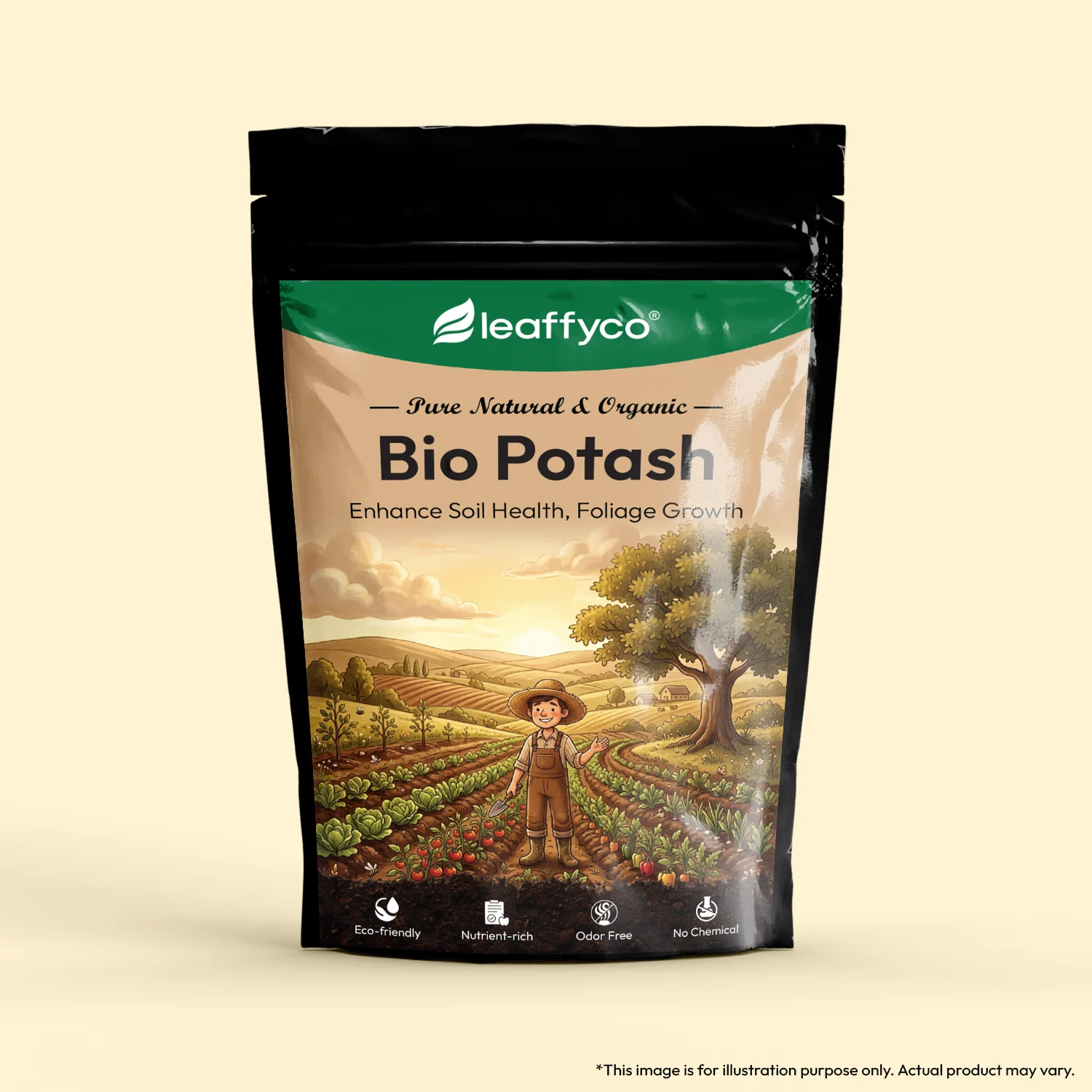
Potassium is one of the three primary nutrients required by plants, alongside nitrogen and phosphorus. It plays a vital role in plant growth, flowering, fruit development, disease resistance, water regulation, and overall crop productivity. Although most agricultural soils contain large reserves of potassium, a significant portion remains locked in insoluble mineral forms that plants cannot absorb. This often leads farmers to apply expensive chemical potash fertilizers to meet crop requirements.
Bio Potash is an innovative biological fertilizer formulated with naturally occurring Potassium Solubilizing Bacteria (KSB) and Potassium Mobilizing Microorganisms (KMB) that unlock fixed potassium present in the soil and make it available to plants. These beneficial microorganisms release organic acids and enzymes that dissolve insoluble potassium-bearing minerals, improving nutrient availability and uptake. Scientific studies have shown that potassium-solubilizing microorganisms can significantly improve potassium availability, enhance root development, increase nutrient efficiency, and support sustainable agricultural production. Bio Potash serves as an eco-friendly alternative to excessive chemical fertilizer use while maintaining soil health and crop productivity.
Whether you grow vegetables, fruits, cereals, pulses, plantation crops, flowers, spices, or ornamental plants, Bio Potash can help improve crop performance naturally while reducing fertilizer costs.
What is Bio Potash?
Bio Potash is a microbial biofertilizer containing specialized strains of potassium-solubilizing bacteria. These beneficial microorganisms convert insoluble forms of potassium present in soil minerals such as feldspar, mica, and silicates into forms that can be readily absorbed by plant roots.
Unlike conventional chemical fertilizers that simply add nutrients to the soil, Bio Potash improves the natural nutrient cycling process by activating existing soil reserves. This results in improved nutrient utilization, stronger plant growth, and long-term soil fertility enhancement.
The beneficial microbes colonize the root zone and continuously mobilize potassium throughout the crop growth cycle. This biological process supports healthy plant metabolism and promotes sustainable nutrient management.
Importance of Potassium in Plant Growth
Potassium is often referred to as the “Quality Nutrient” because of its influence on crop quality and market value.
Potassium helps plants by:
- Regulating water balance and transpiration
- Improving photosynthesis efficiency
- Enhancing enzyme activation
- Promoting protein synthesis
- Increasing root development
- Improving drought tolerance
- Supporting flowering and fruit setting
- Enhancing fruit size and color
- Increasing disease resistance
- Improving shelf life and storage quality
A deficiency of potassium may result in:
- Yellowing leaf margins
- Weak stems
- Poor flowering
- Reduced fruit quality
- Lower yield
- Increased susceptibility to pests and diseases
Bio Potash helps overcome these challenges naturally by ensuring continuous potassium availability throughout the crop cycle.
Key Benefits of Bio Potash
- Improves Potassium Availability: Bio Potash converts fixed and unavailable potassium into plant-available forms. This improves nutrient uptake and ensures crops receive sufficient potassium for optimal growth.
- Enhances Root Development: The beneficial microbes stimulate root growth, root branching, and root hair formation. A stronger root system allows plants to absorb more nutrients and water from the soil.
- Increases Crop Yield: Improved potassium nutrition directly contributes to higher productivity. Crops treated with Bio Potash often demonstrate better vegetative growth, flowering, fruit set, and overall yield.
- Boosts Flowering and Fruiting: Potassium plays a critical role during reproductive stages. Bio Potash supports flower initiation, fruit formation, fruit filling, and maturity.
- Improves Fruit Quality: Regular use of Bio Potash helps improve:
- Fruit size
- Color development
- Taste
- Aroma
- Sugar content
- Shelf life
- Market value
- Enhances Drought Resistance: Potassium regulates water movement within plants. Bio Potash helps crops tolerate water stress and drought conditions more effectively.
- Strengthens Disease Resistance: Healthy potassium levels improve plant immunity and strengthen cell walls, making plants more resistant to diseases and environmental stress.
- Reduces Chemical Fertilizer Requirement: Bio Potash improves the efficiency of existing soil nutrients and applied fertilizers. Farmers may reduce dependence on chemical potash fertilizers while maintaining productivity.
- Improves Soil Fertility: Continuous application enhances microbial activity and promotes a healthier soil ecosystem.
- Eco-Friendly and Sustainable: Bio Potash supports organic farming and sustainable agriculture by reducing chemical fertilizer inputs and improving nutrient cycling naturally.
How Bio Potash Works
The microorganisms present in it colonize the rhizosphere (root zone) and begin breaking down potassium-bearing minerals through biological processes.
These microbes:
- Produce organic acids
- Release enzymes
- Dissolve silicate minerals
- Mobilize fixed potassium
- Improve nutrient availability
As a result, previously unavailable potassium becomes accessible to plants, leading to better nutrient absorption and improved crop performance.
Application Method
- Soil Application: Mix the recommended quantity of it with compost, farmyard manure, vermicompost, or organic manure and apply near the root zone.
- Drip Irrigation: Bio Potash can be applied through drip irrigation systems for uniform distribution.
- Seed Treatment: Treat seeds before sowing to encourage early root colonization and vigorous seedling establishment.
- Nursery Application: Suitable for nursery seedlings before transplanting.
- Recommended Dosage: The dosage may vary depending on crop type, soil conditions, and formulation.
- General recommendation:
- Liquid Formulation: 1–2 liters per acre
- Powder Formulation: 2–5 kg per acre
- Always follow the dosage instructions provided on the product label.
- General recommendation:
Why Choose Bio Potash?
- Advanced Potassium Solubilizing Bacteria
- High microbial count
- Suitable for all crops
- Improves fertilizer efficiency
- Eco-friendly formulation
- Supports organic farming
- Enhances soil microbial activity
- Increases crop quality and yield
- Cost-effective nutrient management solution
- Long-term soil health benefits
Bio Potash for Organic Farming
Modern agriculture faces challenges such as declining soil fertility, rising fertilizer costs, and environmental degradation. It provides a sustainable solution by harnessing naturally beneficial microorganisms to improve nutrient availability.
Organic growers particularly benefit from it because it aligns with sustainable farming principles while maintaining crop productivity and quality.
Storage Instructions
- Store in a cool and dry place.
- Avoid direct sunlight.
- Keep away from chemical pesticides and fungicides.
- Use before the expiry date mentioned on the packaging.
Final Words
Bio Potash represents the future of sustainable nutrient management. By utilizing naturally occurring potassium-solubilizing microorganisms, it transforms unavailable soil potassium into a usable form for crops. The result is stronger roots, healthier plants, better flowering, improved fruit quality, higher yields, and enhanced soil fertility.
Whether you are a home gardener, organic grower, or commercial farmer, It is an excellent addition to your nutrient management program. Regular use can help reduce chemical fertilizer dependence while promoting long-term agricultural sustainability and profitability.
Frequently Asked Questions (FAQs)
What is Bio Potash?
It is a microbial biofertilizer containing potassium-solubilizing bacteria that make soil potassium available to plants.
Can Bio Potash replace chemical potash fertilizers?
It improves potassium availability and fertilizer efficiency. It can reduce chemical fertilizer requirements when integrated into a balanced nutrient program.
Is Bio Potash suitable for organic farming?
Yes. It is widely used in organic and sustainable farming systems.
Which crops benefit most from Bio Potash?
All crops can benefit, including vegetables, fruits, cereals, pulses, flowers, plantation crops, and field crops.
How often should Bio Potash be applied?
Generally, 2–3 applications during the crop cycle provide the best results, depending on crop requirements and soil conditions.

Reviews
There are no reviews yet